
Last updated September 20, 2026
Full 25-point door and opener safety check with every visit - springs, cables, rollers, tracks, and your LiftMaster or Chamberlain opener included
You get a price before we start. It does not change when the truck arrives.
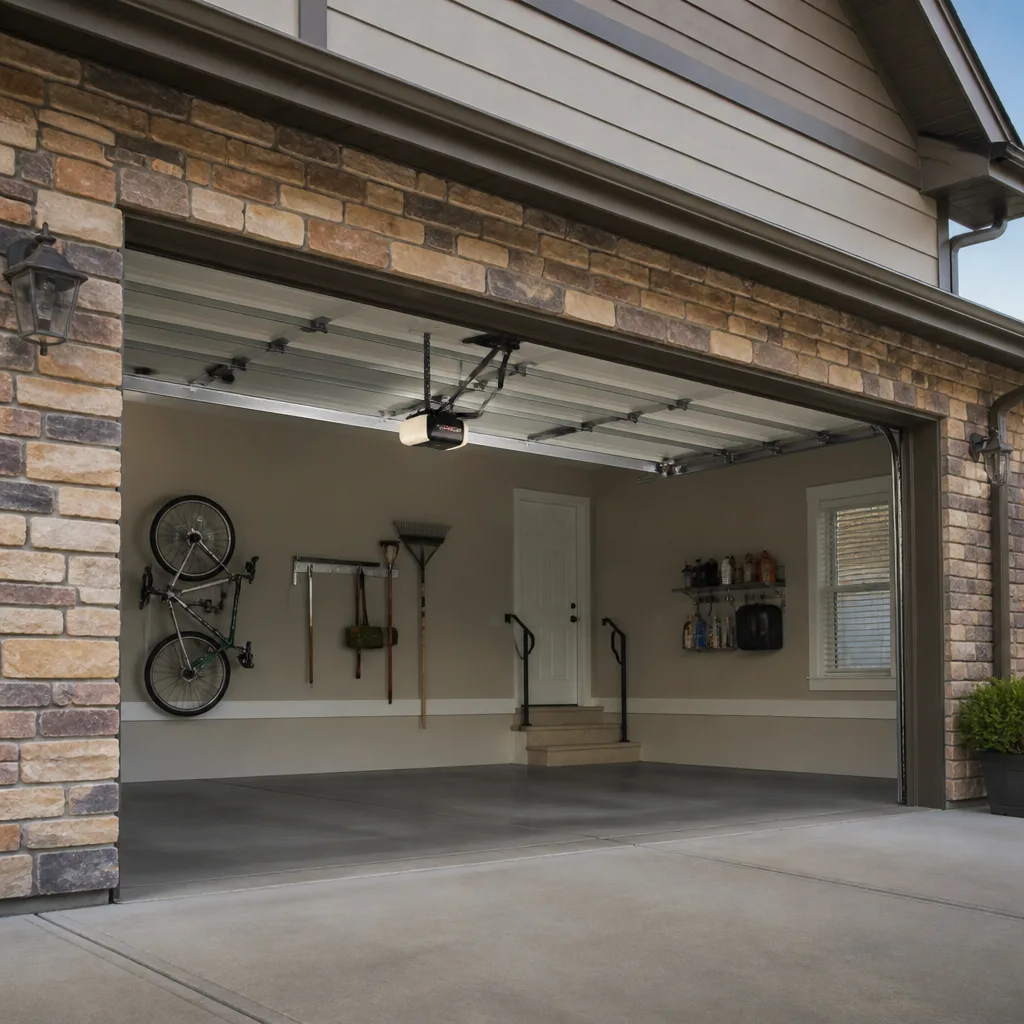
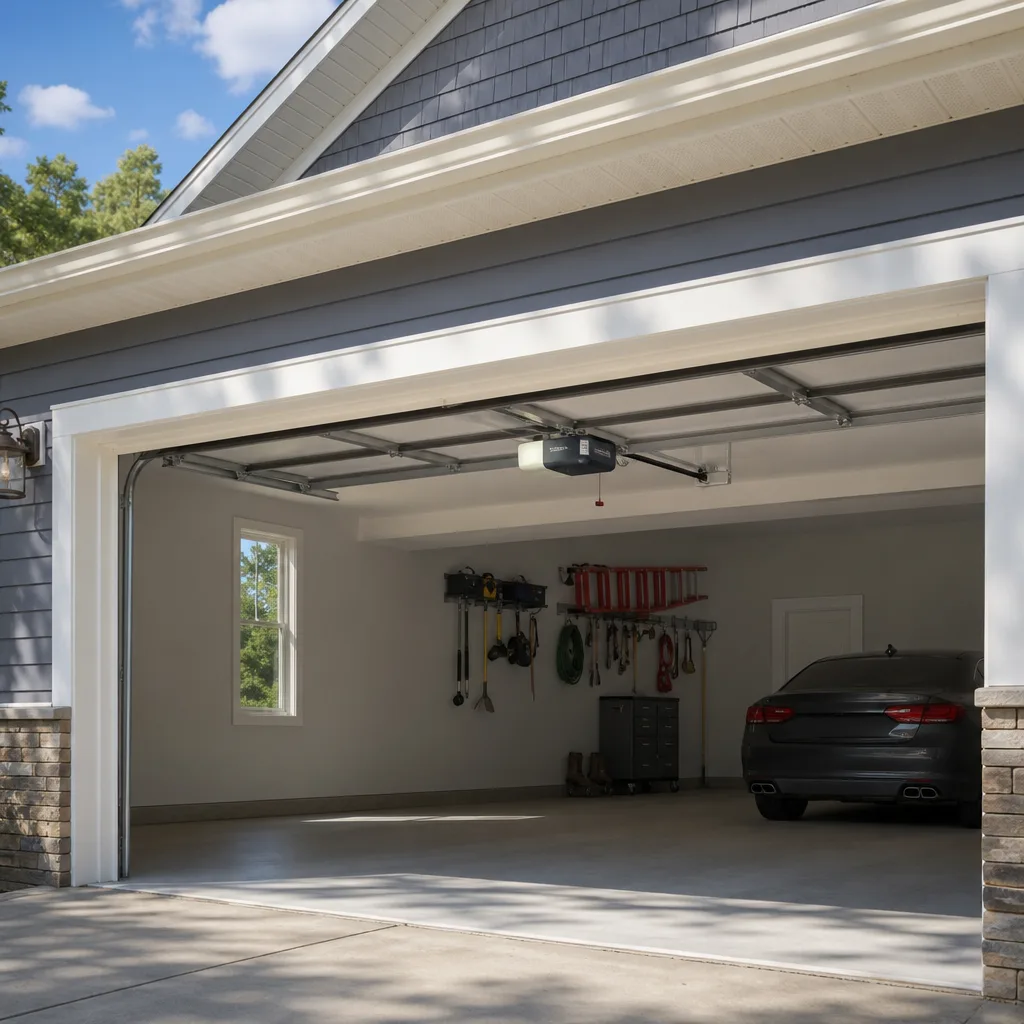
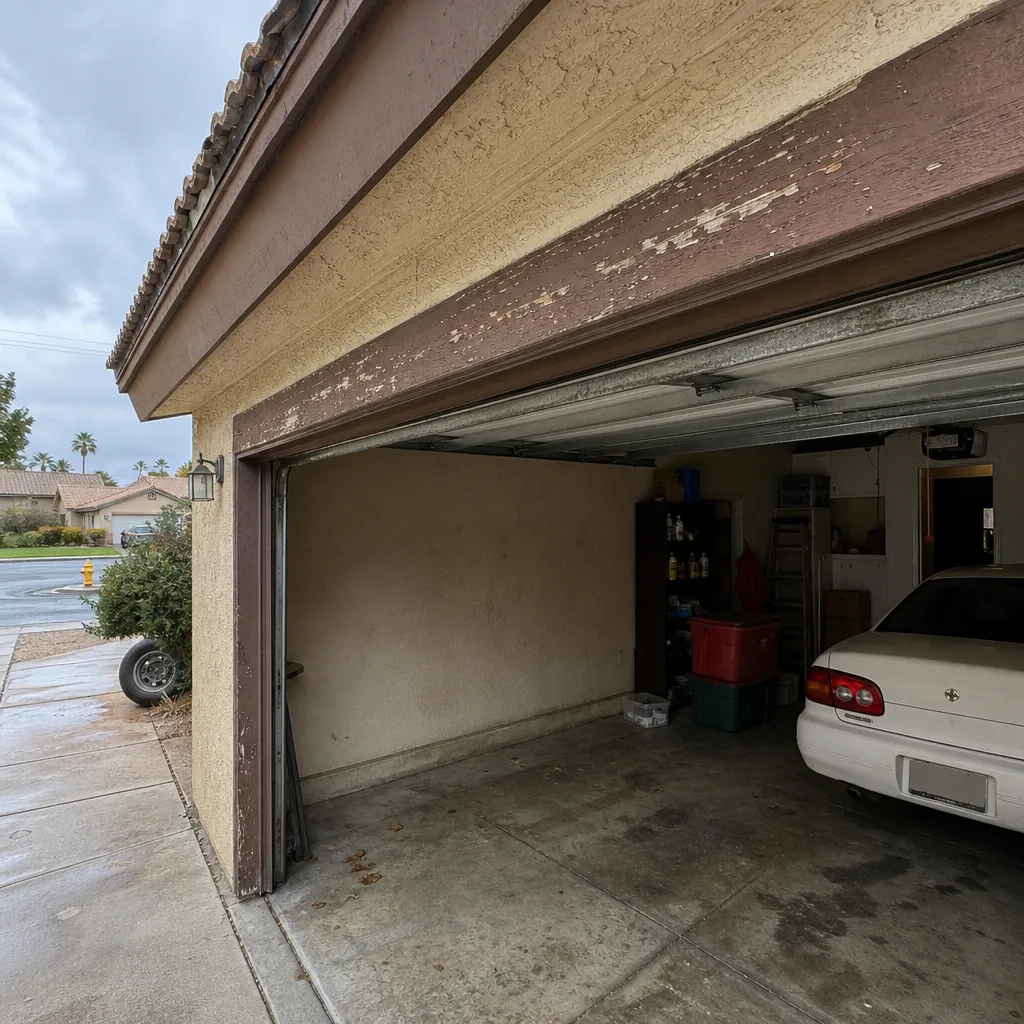 Before
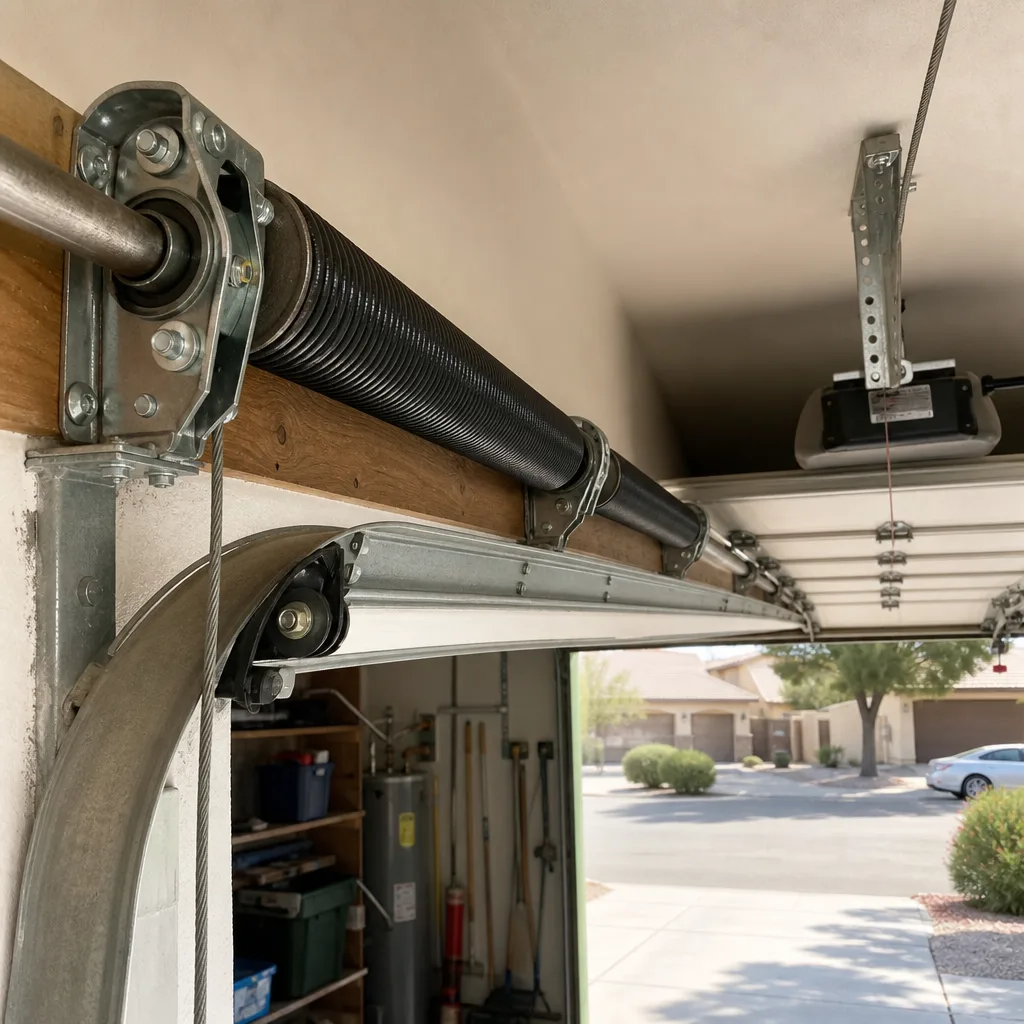 After
After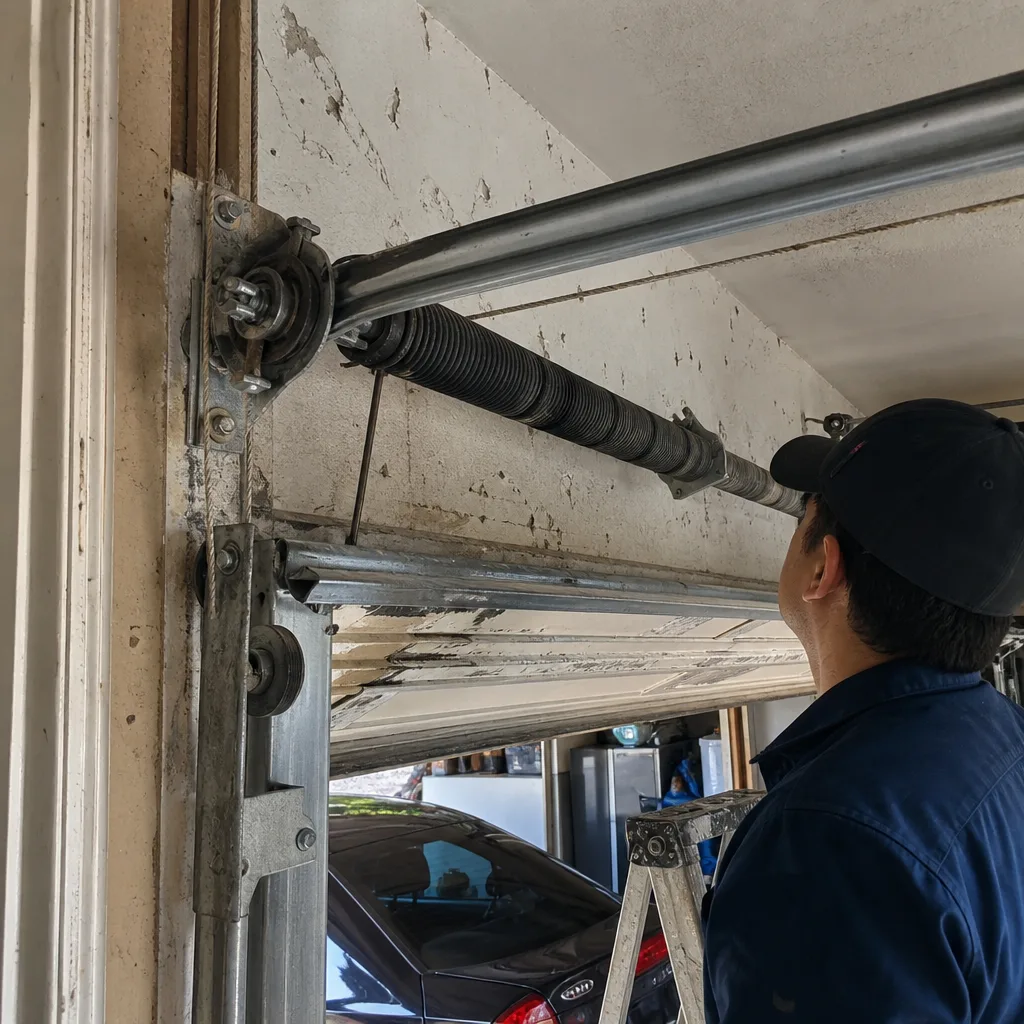 Before
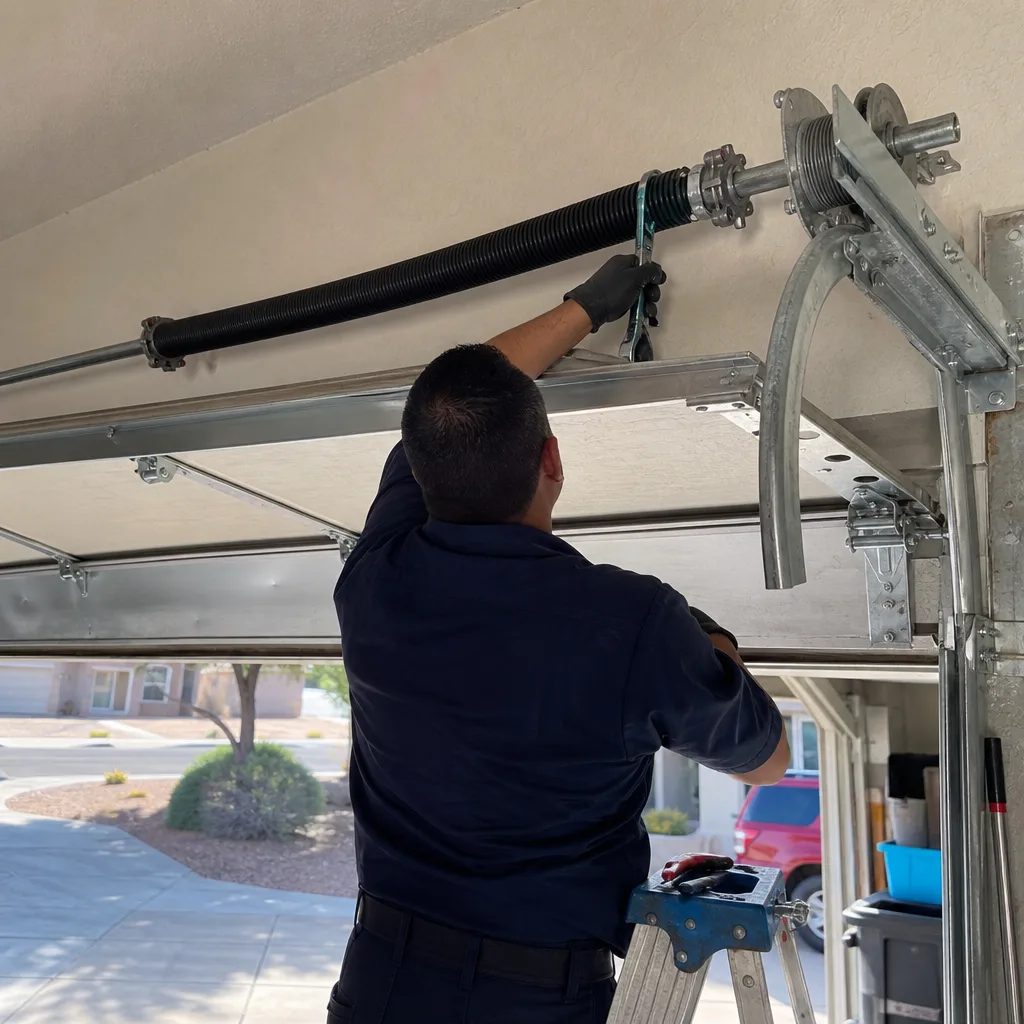 After
After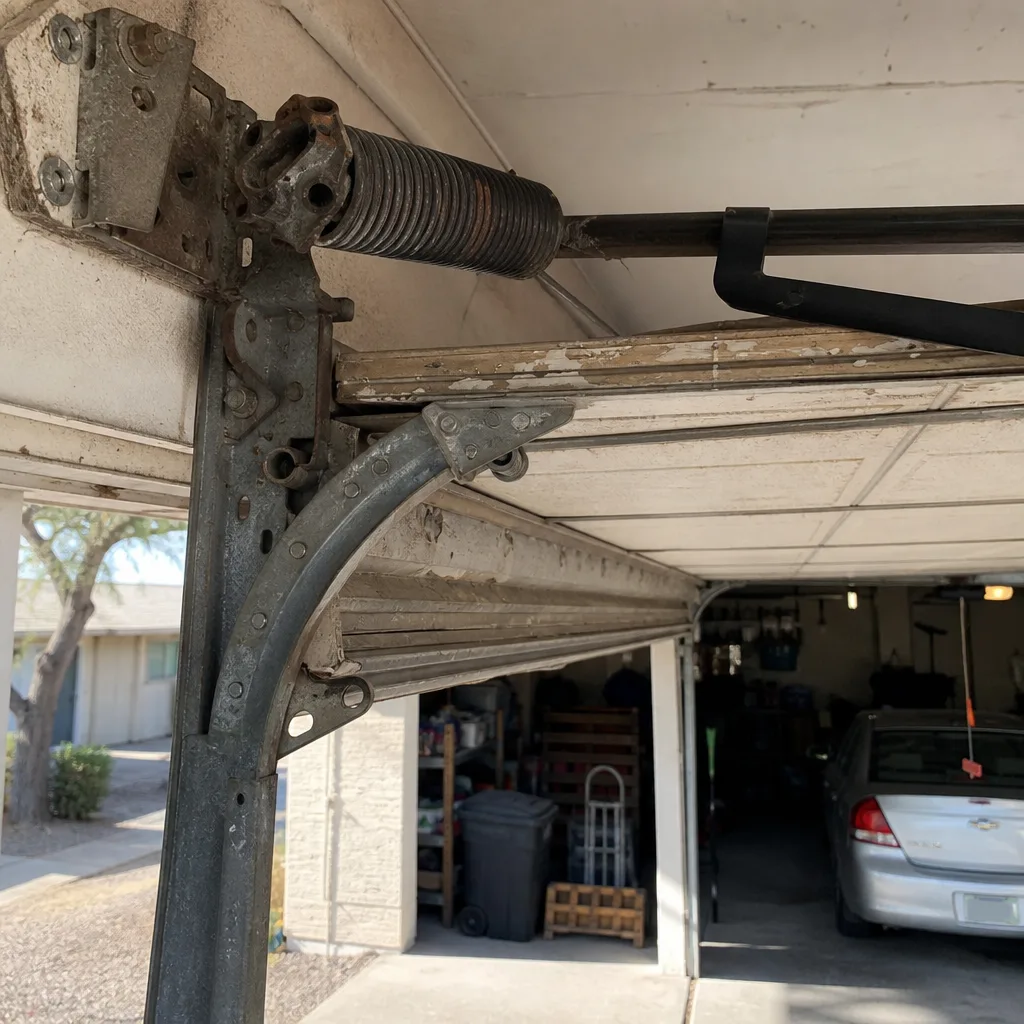 Before
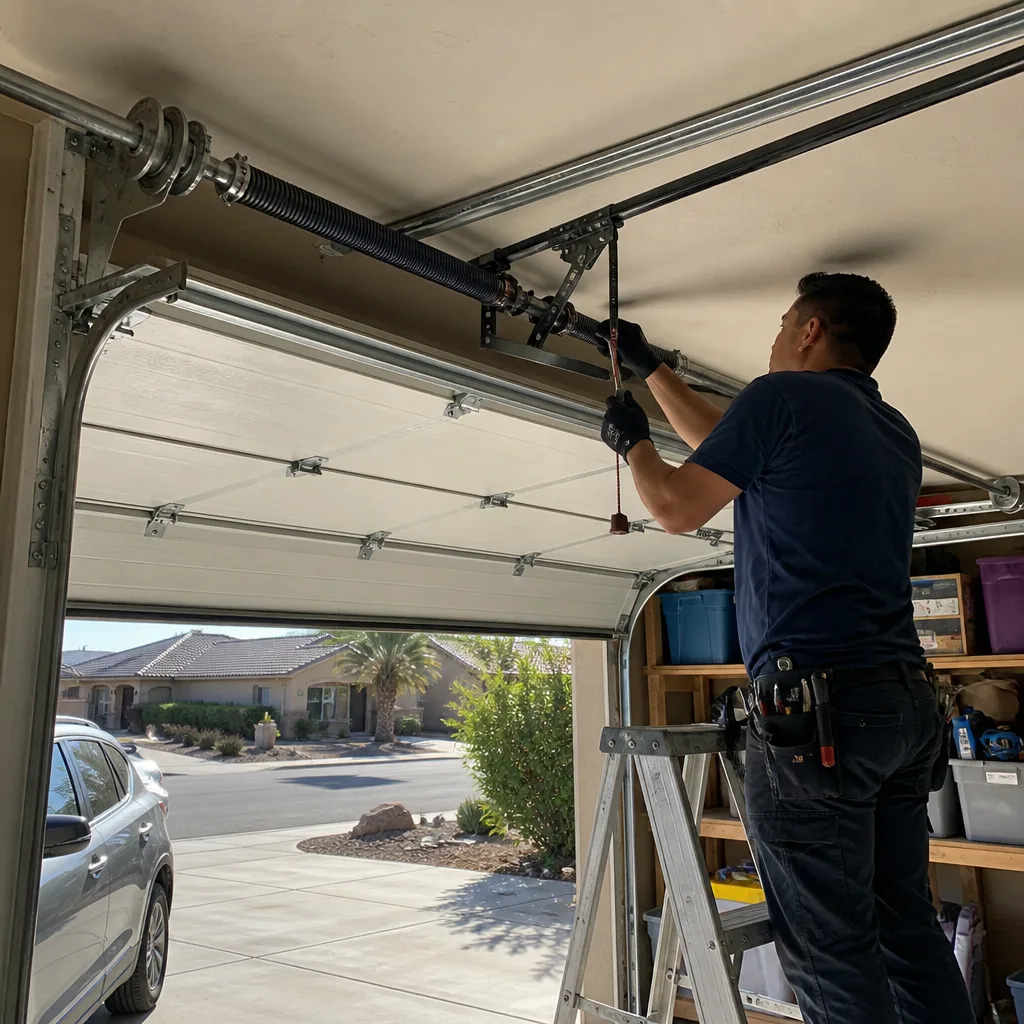 After
AfterGarage Door Permits, Codes & Inspections in AZ: What You Need to Know
A $1,200 garage door replacement in Mesa can close without a permit, pass inspection, and resell cleanly. Or it can trigger a retroactive permit requirement at closing if a structural header was modified without documentation, even by a licensed contractor. Most homeowners assume permits apply to every garage door job equally. They don’t. Arizona’s adoption of the International Residential Code (IRC) draws a sharp line between routine replacement work and structural modification, and that line is where disclosure liability lives. This guide maps the exact permit boundaries for Mesa, explains what inspectors actually check, and shows you how to pull a permit history on any address before you buy or sell. For related reading, see our Garage Door Warning Signs: A Mesa Homeowner’s Reference Guide.
Quick Answer
In Mesa, like-for-like garage door replacement without structural changes does not require a permit under City of Mesa Building Safety rules. You typically need a permit when the rough opening is widened, the header is modified, a manual door gains a motorized opener with new electrical wiring, or a door separating an attached garage from living space is replaced with a non-fire-rated unit. Most of those requirements trace back to Arizona’s adoption of the IRC, enforced locally by Mesa building inspectors.
Table of Contents
- Where Mesa Draws the Permit Line
- Rough Opening Modifications and Structural Headers
- Openers, Electrical Circuits, and Dedicated Outlets
- Fire-Rated Doors Between Attached Garages and Living Space
- How to Pull a Permit History on a Mesa Address
- What Rough and Final Inspections Cover in Mesa
- Permit Disclosure on the Arizona Residential Resale Real Estate Purchase Contract
BeforeAfterWhere Mesa Draws the Permit Line
The City of Mesa Building Safety Division operates under the 2018 International Residential Code with local amendments, enforced by the city’s permit desk at 55 North Center Street. Their published guidance separates garage door work into two categories: routine replacement and structural alteration. Routine replacement means the new door occupies the same rough opening, uses the same header, and connects to existing attachment points. Structural alteration means the opening changes size, the header gets modified or replaced, or the wall framing around the opening is cut into.
In practice, we’ve seen Mesa homeowners surprised by both directions. A straightforward swap of a 16×7 steel door for an Amarr or Wayne Dalton model with the same dimensions almost never triggers a permit review. But we’ve also seen a homeowner who widened a single-bay door to a double-bay door without a permit, then discovered at resale that the title company flagged an unpermitted structural modification and required retroactive permitting before the sale could proceed. That retroactive process costs more than the original permit would have.
Here is what falls on each side of the line in Mesa:
- No permit required: Replacing a garage door panel or section with factory-matched components. Replacing an entire door assembly where width, height, and header remain unchanged. Replacing tracks and rollers using the original mounting locations. Replacing weatherstripping, seals, hinges, or springs.
- Permit required: Widening or narrowing the rough opening. Cutting, replacing, or altering the header beam. Adding a new garage bay where a wall existed. Installing a door where no opening existed before. Adding a motorized opener to a manual door when new electrical wiring or circuits are involved.
- Gray zone requiring a phone call: Converting a two-car door to two single doors, or vice versa. Any change that modifies king studs, jack studs, or the sill plate.
The practical rule we follow on every Garage Door Installation in Mesa job: if we touch framing, we recommend pulling a permit. If we only swap like-for-like components, we photograph the existing header and rough opening before work begins, document that no framing was altered, and include that photo record in the customer’s file. That photo documentation is what protects you later, whether from a home inspector asking questions or a buyer requesting proof at closing.
Rough Opening Modifications and Structural Headers
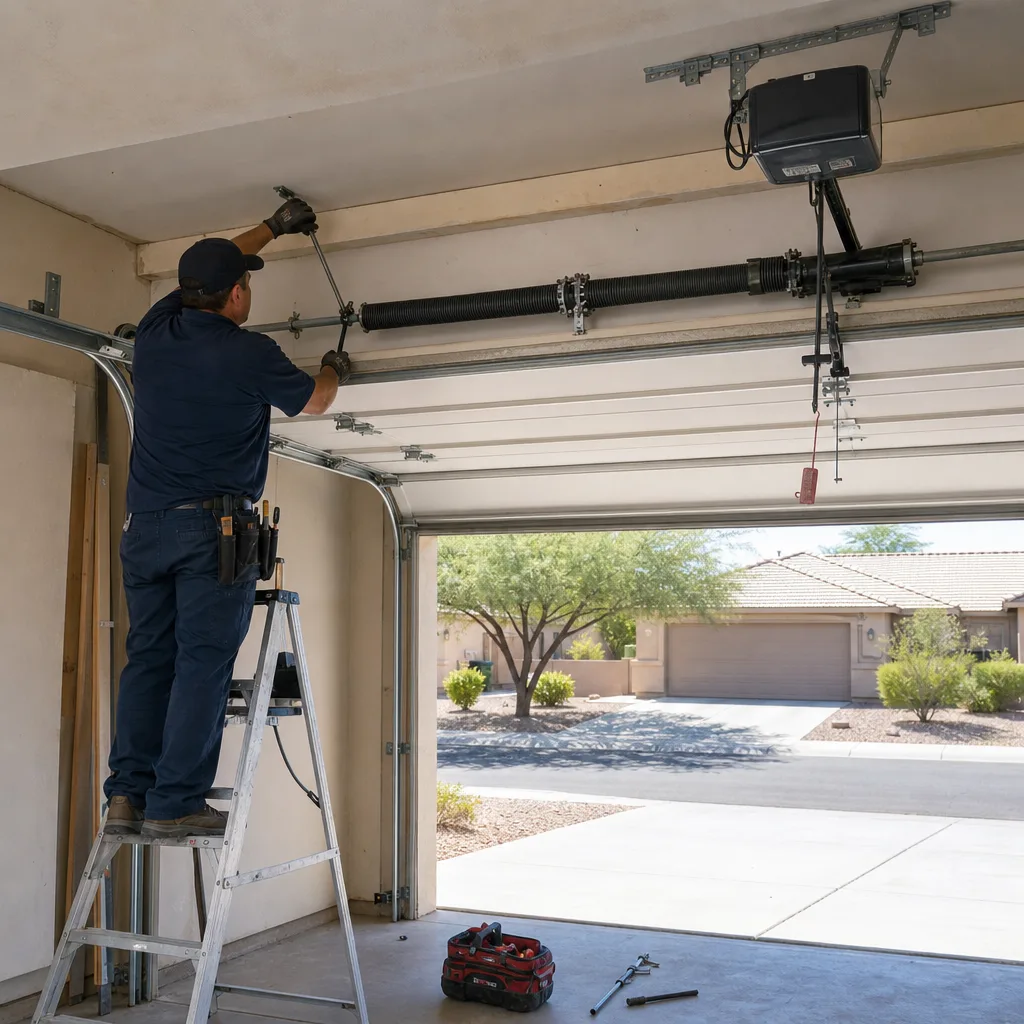
The rough opening is the framed hole in your garage wall that the door assembly mounts into. The header is the horizontal beam spanning that opening, carrying the weight of the structure above. In Mesa’s climate, headers are typically engineered lumber, LVL, or steel, and they are not modular components you can casually resize. When a header is modified without a permit, you’ve created an unpermitted structural alteration in the eyes of the city, the buyer’s home inspector, and any lender’s appraiser.
What does a Mesa inspector look for on a structural modification? The permit application requires a framing plan showing the existing and proposed header dimensions, the number of king studs and jack studs on each side, and the connection details. A licensed engineer’s stamp is not always required for simple header swaps, but it becomes necessary when the span exceeds the prescriptive limits in IRC tables. The inspector then verifies the header is sized correctly for the span and load, that it bears fully on the jack studs, and that the assembly is properly fastened with through-bolts or structural screws rather than nails alone.
Here is the sequence we follow when a Mesa homeowner wants to widen a garage opening:
- Measure the existing rough opening and verify the header type, size, and condition. Document with photos before anything is removed.
- Consult IRC span tables to determine whether the new header size will meet code without an engineer’s stamp, or whether engineering is required.
- Pull a City of Mesa structural permit, including a framing plan and any required engineering calculations.
- Perform the framing work, including temporary shoring if any wall load is transferred during the process.
- Schedule a rough inspection with Mesa Building Safety before insulation or wall covering is installed over the new framing.
- Schedule a final inspection after the door, opener, and any electrical work are complete.
We’ve seen this process take anywhere from three days to three weeks depending on inspector availability and whether plan review kicks the application back for additional detail. Plan review for structural work in Mesa currently runs five to ten business days for residential applications, though simple re-headers sometimes clear faster. The permit fee for a structural garage door modification typically ranges from $120 to $400 depending on valuation, but the city’s fee schedule changes periodically, so we always call the permit desk to confirm before submitting.
Openers, Electrical Circuits, and Dedicated Outlets
There is a persistent myth that installing a garage door opener always requires a permit in Mesa. It doesn’t. The permit trigger is not the opener itself but the electrical wiring that powers it. If a functioning, code-compliant receptacle already exists in the proper location, mounting a new opener to that receptacle is considered routine equipment installation, not an electrical alteration.
The permit becomes necessary when you run new wire, add a new circuit, or move the receptacle. Under IRC Section E3902 and Mesa’s local amendments, the garage door opener circuit must be a dedicated 120-volt circuit, and the receptacle must be installed at the ceiling level near the opener’s head unit. Garage receptacles, including the opener circuit, require GFCI protection under the 2018 IRC unless listed for a specific exception. That’s the piece older Mesa homes most frequently fail on: a 1990s-era opener circuit protected by a standard breaker rather than GFCI is a code violation that a buyer’s inspector will flag.
If we pull an electrical permit for opener work on an Garage Door Opener Repair & Installation in Mesa project, here is what the inspector verifies:
- The dedicated circuit is sized properly for the opener’s current draw, typically 15 amps minimum.
- GFCI protection exists for the receptacle, either at the breaker or the receptacle itself.
- The receptacle is mounted within reach of the opener’s factory power cord, generally no more than 6 feet from the head unit.
- Wiring is properly stapled, secured, and protected from the door’s moving hardware.
- The low-voltage safety sensors are installed and functioning at 6 inches above the floor on each side of the opening.
The sensor requirement is worth pausing on because it’s the most common final-inspection failure we see on opener installations in Mesa. The IRC and Underwriters Laboratories require photo eye sensors mounted no higher than 6 inches above the garage floor, wired to reverse the door if the beam is broken. An inspector tests this by placing an object in the beam path and confirming the door reverses. If your technician bypassed or removed a sensor to stop nuisance reversals, that door will fail inspection and also violate the manufacturer’s warranty terms on LiftMaster, Chamberlain, Genie, and every other major brand.
Fire-Rated Doors Between Attached Garages and Living Space
Under the IRC as adopted in Arizona, the pedestrian door between an attached garage and the interior of the house must be a solid wood door at least 1-3/8 inches thick, a steel door, or a 20-minute fire-rated door. That requirement exists because attached garages contain vehicles, fuel cans, and other combustibles, and the door is the primary fire and carbon monoxide barrier.
Here is the Mesa-specific application most homeowners don’t know: the man door between garage and house gets the attention, but the vehicle door itself matters too when the garage ceiling has living space above it. In that configuration, the garage ceiling must be fire-separated, and the vehicle door opening must be protected by a door tested to resist fire exposure. Most modern Amarr and Wayne Dalton residential doors with foam insulation cores meet the fire-separation provisions when installed per manufacturer specifications, but a hollow aluminum door or an older thin steel door may not.
When you replace a garage-to-house door during a garage remodel or a full Garage Door Repair in Mesa scope involving wall work, the inspector will verify:
- The replacement door is solid wood, steel, or labeled 20-minute fire-rated.
- The door self-closes. A spring hinge or closer is required; a door that stays open when you walk through fails.
- If there are windows in the door, they are fire-rated glazing or eliminated entirely.
- Weatherstripping and gasketing are installed, since they contribute to the smoke and gas separation.
One more point that catches sellers off guard: the garage ceiling and shared wall between garage and living space must be finished with 1/2-inch gypsum board on the garage side. If you pull a permit for garage work in an older Mesa home built before the 1980s, the inspector may note that the drywall is missing or damaged and require it as a condition of final approval, even though the drywall itself wasn’t part of your original scope. That’s not the inspector being difficult; it’s the fire separation code applying to the entire garage assembly, and the permit triggered the review.
How to Pull a Permit History on a Mesa Address
Before you buy a house in Mesa, before you sell one, or before you hire a garage door contractor in Mesa, pulling the permit history on the address is a step almost nobody takes and everyone should. Unpermitted structural work is a latent defect that Arizona’s seller disclosure statement specifically asks about, and a “I didn’t know” answer does not protect you from a rescission claim after closing.
Mesa makes this easier than most cities, but the process is not obvious to someone who hasn’t done it. Here are the steps:
- Go to the City of Mesa website and find the Building Safety Division. Navigate to “Permits and Inspections” and look for the online permit history search.
- Enter the street number and street name only. Do not include “Street,” “Avenue,” or “Drive” in the search field; Mesa’s system prefers the numeric address and suffixless street name.
- Review the returned list of permits. Each record shows the permit number, type, issue date, status, and valuation. A garage door structural alteration will appear as a “Structural Alteration” or “Remodel” permit, not as a “Door Replacement” permit.
- Cross-reference the permit history against the age and condition of the garage. If the home was built in 1998 and the garage header looks newer than that, but no permit exists, that is a red flag for unpermitted work.
- If you need physical copies of permit records, submit a public records request through Mesa’s online form. The city charges a nominal per-page fee and typical turnaround is five to ten business days.
- If the search shows no permits at all on a home that clearly had work done, call the Mesa Building Safety Division directly at their published front desk number and ask for a manual records check. Older permits, pre-2000, may not be fully digitized.
What should you do if your Mesa address shows no record for garage work you believe was done by a prior owner? First, document your search. Save a screenshot of the empty permit history, note the date you searched, and keep it in your home file. Second, if you’re selling, disclose what you know: “Permit history search on [date] returned no record of garage door structural work; work appears to pre-date current ownership.” That statement is truthful and puts the buyer on notice. If you’re buying, the same discovery gives you a negotiation point with the seller or an opportunity to request they pull a retroactive permit before closing.
What Rough and Final Inspections Cover in Mesa
When a permit is required for garage door work in Mesa, the inspection process follows a defined sequence. For simple electrical work (adding an opener circuit), only a final inspection is typically required. For structural work (header modification, rough opening changes), both a rough and a final inspection are mandatory, and the rough inspection is the one that actually protects the home’s structural integrity.
The rough inspection happens after the framing is complete but before wall covering hides the work. A Mesa inspector at rough checks:
- The header size and material match the approved framing plan or engineering detail.
- The header bears fully on jack studs at each end, with no shims stacked to close a gap.
- King studs run continuously from sole plate to top plate, and jack studs are properly nailed or screwed to the kings.
- If a masonry wall was penetrated, the lintel or steel angle above the opening is properly sized and supported.
- Any electrical rough-in for the opener circuit is visible, with wire gauge and routing visible before drywall goes up.
The final inspection happens after the door, opener, and all trim are in place. The inspector at final checks:
- The door operates smoothly through a full manual cycle and reverses under the required obstruction test.
- The photo eye safety sensors are present, mounted at or below 6 inches, and functioning.
- The fire separation between garage and living space meets the requirements if the project touched that wall or ceiling.
- The opener receptacle is GFCI-protected and properly mounted.
- All work on the permit card matches what is present in the field. If extra scope was performed, the inspector notes it.
One honest observation from our work across Mesa: the rough and final inspections are not the same thing, and they are not interchangeable. A homeowner who tries to close up a structural modification before the rough inspection will get the drywall opened back up to expose the framing. That’s not an inspector being difficult; it’s the only way they can legally verify the work. Waiting for the inspector to call before closing a wall is one of the most cost-effective decisions a Mesa homeowner can make on a structural garage project.
Permit Disclosure on the Arizona Residential Resale Real Estate Purchase Contract
The Arizona Association of Realtors Residential Resale Real Estate Purchase Contract contains a specific section on permits and code compliance. The standard Arizona seller disclosure form asks whether the seller is aware of any additions, alterations, or improvements made without required permits. A “no” answer when permits were required is a misrepresentation, and Arizona case law allows the buyer to pursue rescission or damages if that misrepresentation was material.
Here is what that means for a Mesa seller who replaced a garage door five years ago but didn’t know whether a permit was required at the time:
- Pull the permit history on your own address before listing. This takes thirty minutes and costs nothing.
- If no permit exists for a like-for-like replacement, you are compliant. The work did not require a permit in Mesa.
- If no permit exists for a header modification or rough opening enlargement, you have a problem to solve before listing. Retroactively pulling the permit is possible, but it will require opening the wall to expose the framing, having it inspected, and then re-closing and finishing the work.
- If you disclose the unpermitted work on the standard seller disclosure, you have fulfilled your legal obligation, but buyers will negotiate a price reduction or demand retroactive permitting as a condition of sale.
- If you do not disclose and the buyer discovers the unpermitted work during a home inspection, you have compounded the problem with the misrepresentation itself.
We’ve seen this play out in neighborhoods across Mesa, from the older subdivisions east of Country Club Drive to the newer builds in Eastmark and Cadence. The homeowner who documents everything, pulls the permit history, and discloses honestly walks away with a clean sale. The one who assumes nobody will check ends up negotiating from a defensive position or losing the sale entirely. The permit question isn’t bureaucratic overhead; it’s real money at the closing table.
Common Mistakes to Avoid
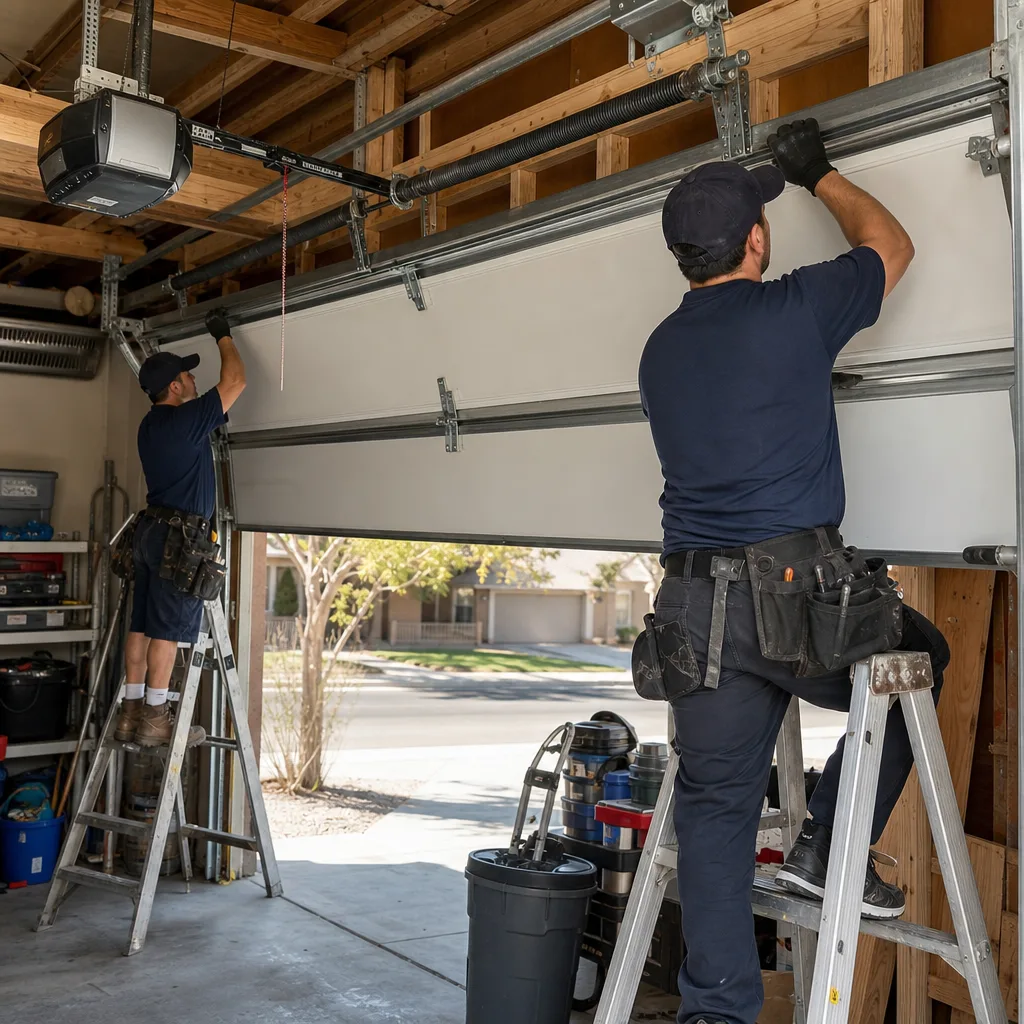
- Assuming every door replacement needs a permit. Like-for-like replacement without framing changes does not trigger a Mesa permit. Paying for unneeded permits adds cost and delay without protecting anything. Conversely, structural changes without permits create a liability that surfaces at sale.
- Treating the header as a cosmetic component. The header carries wall and roof load. Cutting it, notching it, or replacing it with unpermitted lumber is one of the most expensive retroactive correction scenarios we’ve seen in Mesa inspections.
- Installing a door between garage and living space without checking fire rating. A standard interior hollow-core door fails the Arizona IRC fire separation requirement. The inspector will require replacement with a solid wood or steel door with a self-closing mechanism.
- Bypassing photo eye sensors to stop nuisance reversals. This disables a safety system required by code and manufacturer standards, fails final inspection, and creates personal injury liability if someone is struck by a closing door.
- Skipping the rough inspection on structural work. Hiding unpermitted framing behind drywall is the easiest way to turn a $300 permit into a $3,000 retrofit. The inspector must see the framing before it is covered.
- Relying on a contractor’s verbal assurance that “we do this all the time without permits.” The liability is yours, not theirs. A licensed contractor who cuts a structural header without a permit has committed a code violation, and you are the one answering for it in a sale or insurance claim.
When to Call a Professional
Garage door permit questions sit at the intersection of structural engineering, electrical code, and real estate disclosure law, which is why even savvy homeowners get tripped up. Call a professional when the job involves a structural header modification, a rough opening change, new electrical circuits for an opener, or a fire-rated door replacement between garage and living space. For ongoing maintenance tips, see our Garage Door Repair Maintenance Checklist for Mesa Homeowners. These are the projects where a Mesa inspector’s approval is required, and where the documentation you receive matters as much as the work itself. Servo Garage Doors Mesa offers free estimates in Mesa and provides a documented photo record on every visit, including permit-relevant evidence of what was found and what was done. Call (520) 391-9660 to schedule.
Frequently Asked Questions
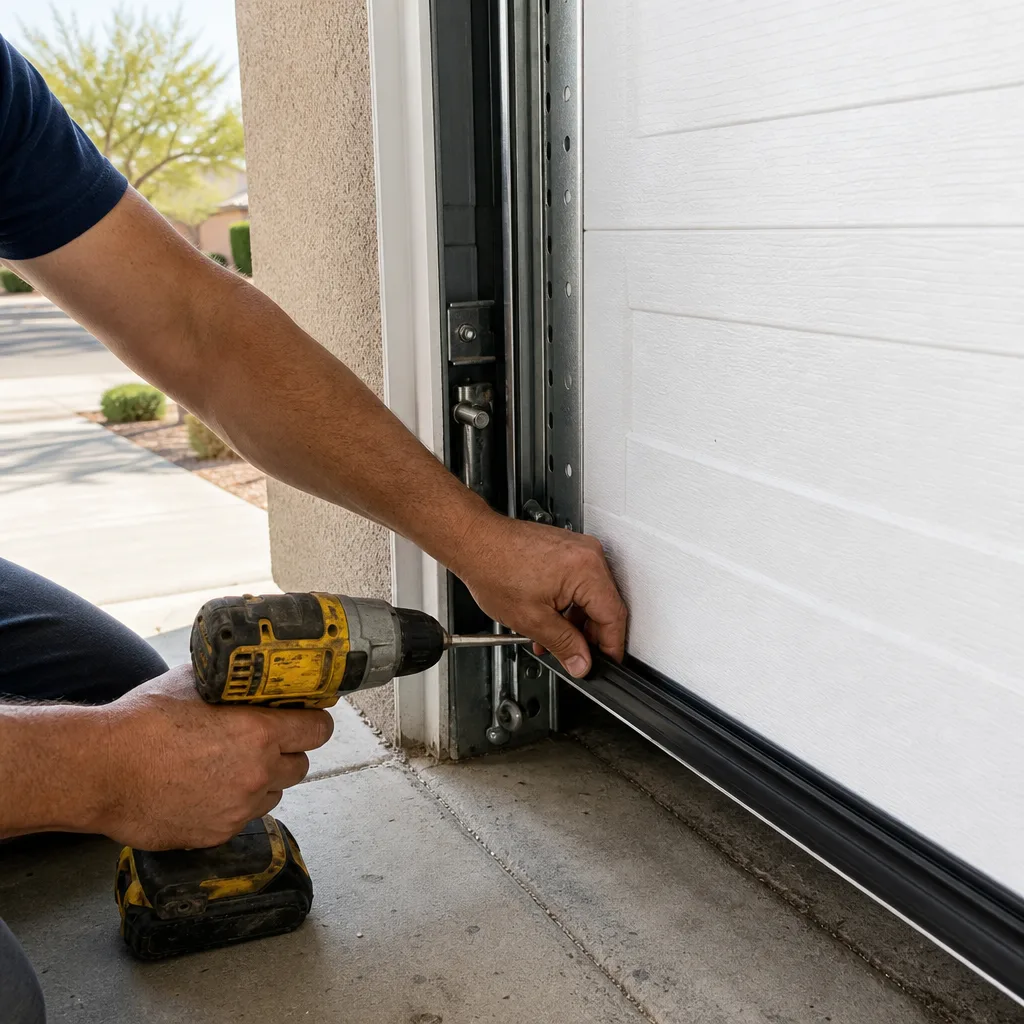
No, not for a like-for-like replacement where the rough opening, header, and framing remain unchanged. You do need a Mesa permit if the opening is widened, the header is modified, or new electrical wiring is run for an opener. The permit trigger is structural or electrical change, not the door itself.
Expect $120 to $400 for a structural garage door permit in Mesa, plus $80 to $200 for a separate electrical permit if an opener circuit is added. Total permit costs for a structural modification with electrical work typically land between $200 and $600. These estimates are based on our recent permit applications and Mesa’s published fee schedule, so call the Building Safety Division to confirm before submitting. And for the door work itself, call (520) 391-9660 for a written estimate at no cost.
Yes, and in most cases the licensed contractor who performs the work should pull the permit as the responsible party. If a contractor tells you a structural modification doesn’t require a permit in Mesa, get a second opinion before proceeding. We’ve seen that statement cost sellers thousands at closing when the buyer’s inspector flagged the unpermitted framing.
If the work required a permit and you don’t disclose it, the buyer has grounds for a claim under Arizona’s misrepresentation laws. If the work was routine replacement that didn’t require a permit, you have nothing to disclose. Pull your permit history before listing, disclose what shows up, and let the buyer’s inspector do their job with the facts on the table.
Yes. Arizona’s IRC adoption requires the pedestrian door between an attached garage and living space to be solid wood at least 1-3/8 inches thick, steel, or 20-minute fire-rated, and it must self-close. The vehicle door itself must also meet fire separation requirements when living space sits above the garage. An inspector will check this on any permit-involved garage project.
Simple electrical permits for opener circuits often clear in one to three business days. Structural permits requiring plan review and possibly engineering review typically take five to ten business days, and more complex modifications can take longer. Factor this into your timeline before scheduling the work, and call (520) 391-9660 if you want us to handle the permit application on your behalf.
The Bottom Line
The Mesa permit line is bright and knowable: routine garage door replacement without framing changes requires no permit, while structural modifications and new electrical circuits do. The quiet risk sits with unpermitted header work that hides behind drywall for years and surfaces at resale. Pull a permit history on any Mesa address before you buy or sell, document every job with photos, and don’t accept a contractor’s verbal assurance about permit requirements. When in doubt, a phone call to Mesa Building Safety costs nothing and settles the question. The paper trail is the asset, and in Arizona real estate, that asset compounds. Explore more guides & resources to protect your home investment.
Written by Marcus Deller, Owner at Servo Garage Doors Mesa home, serving Mesa since 2015.