
Last updated September 20, 2026
Full 25-point door and opener safety check with every visit - springs, cables, rollers, tracks, and your LiftMaster or Chamberlain opener included
You get a price before we start. It does not change when the truck arrives.
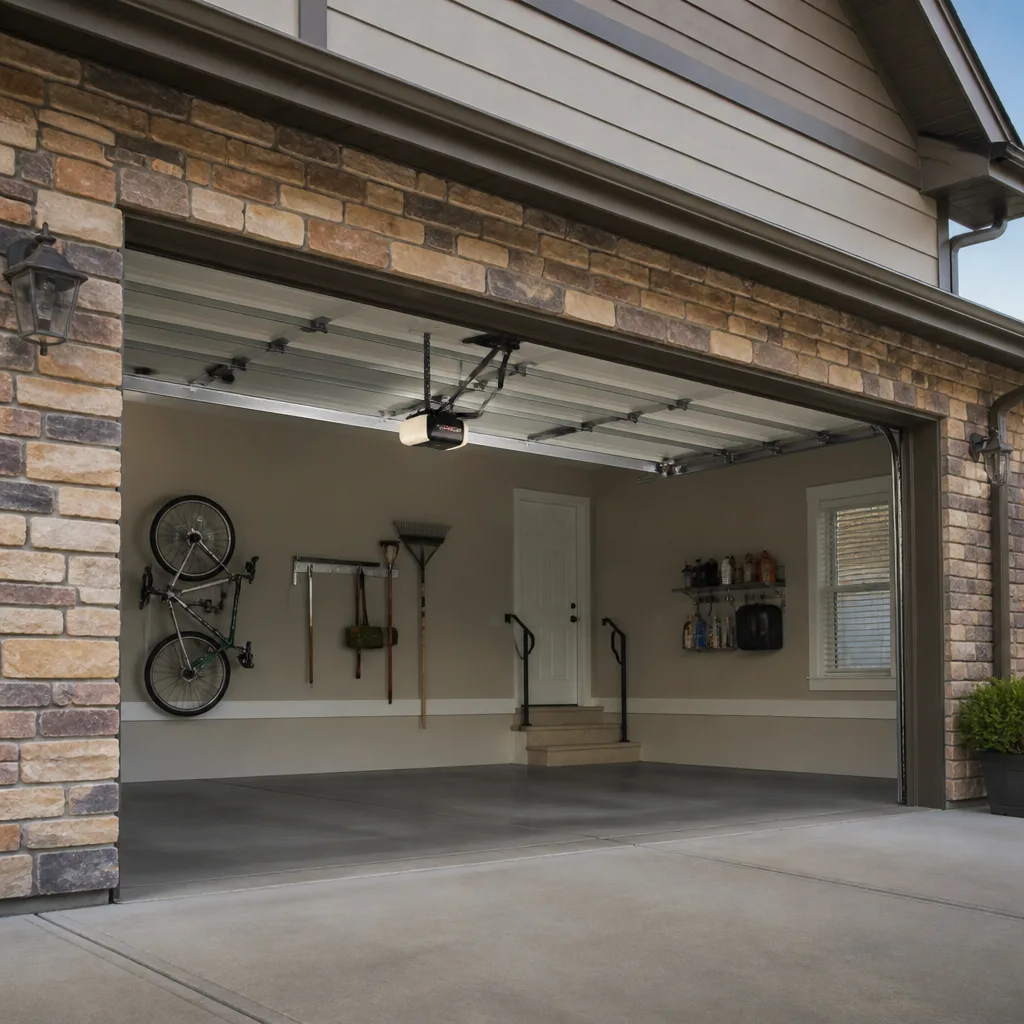
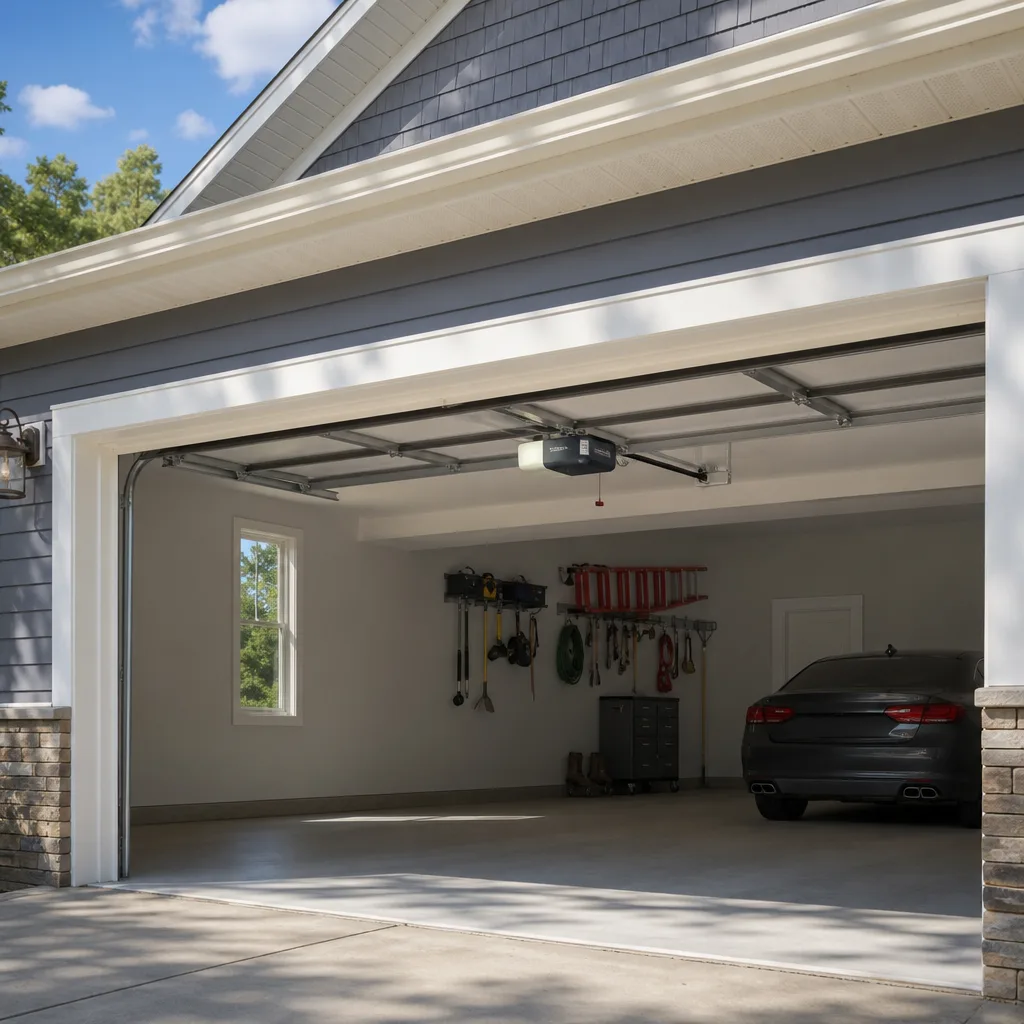
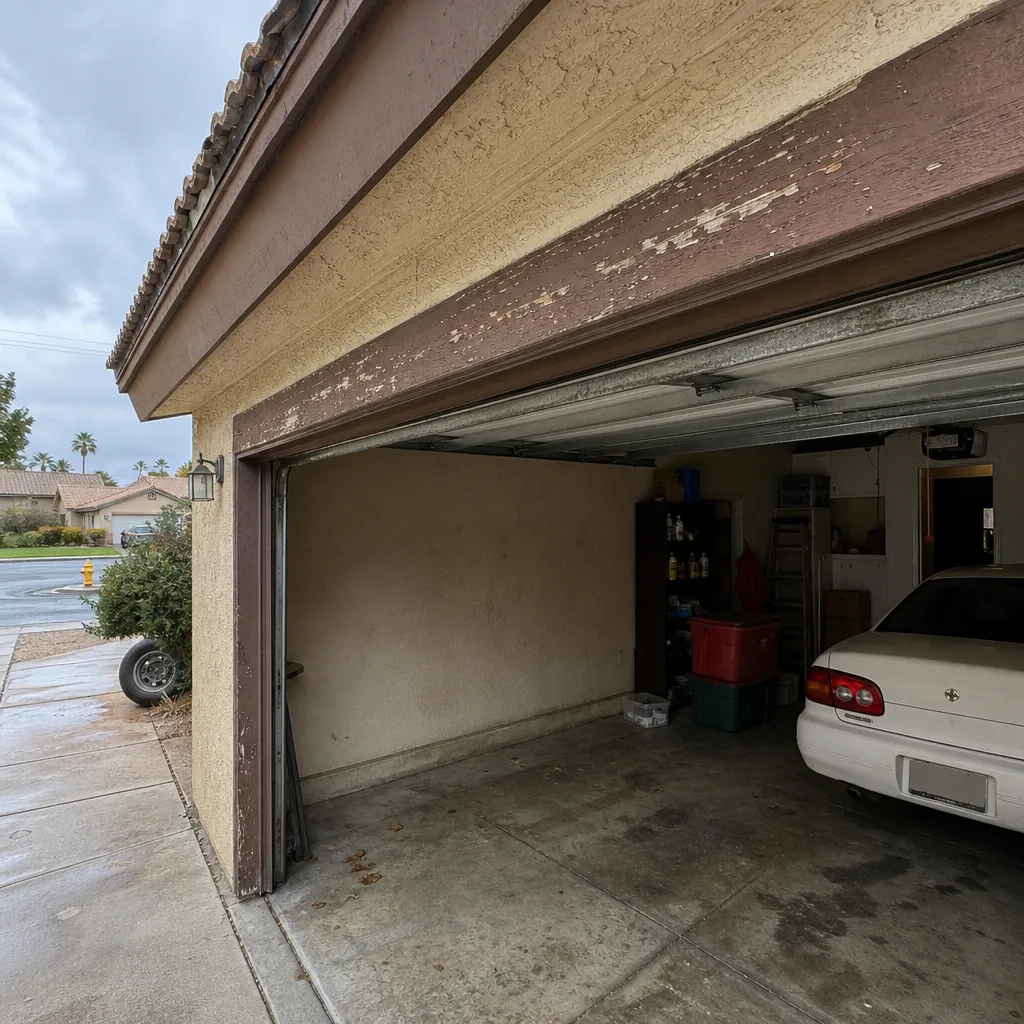 Before
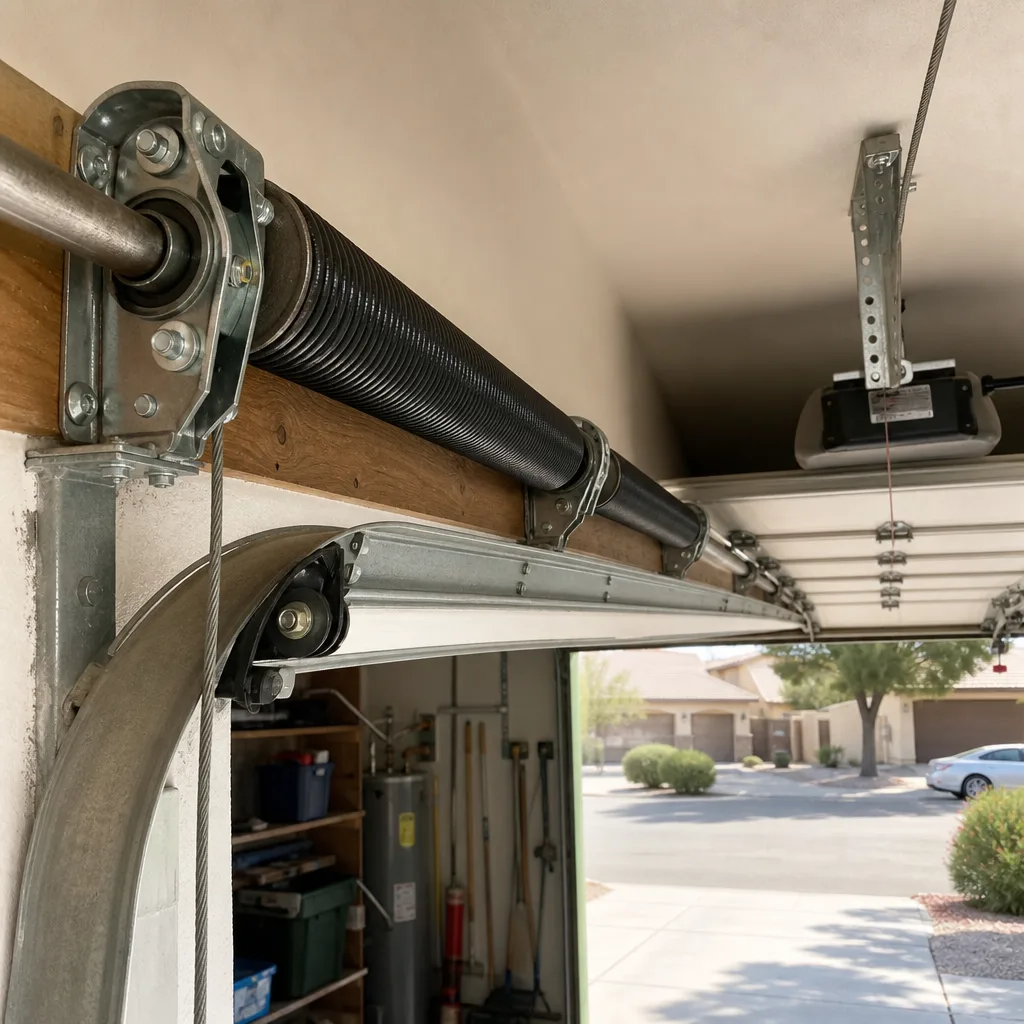 After
After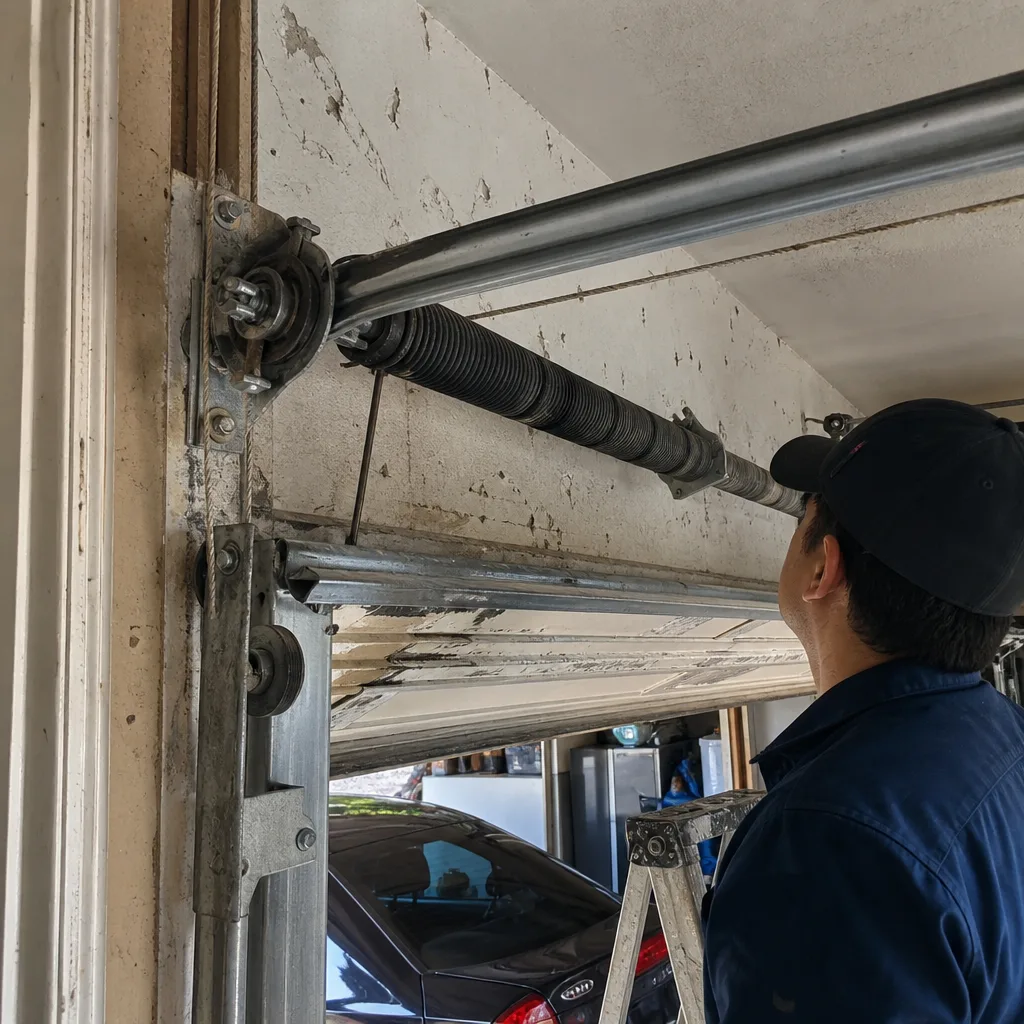 Before
 After
After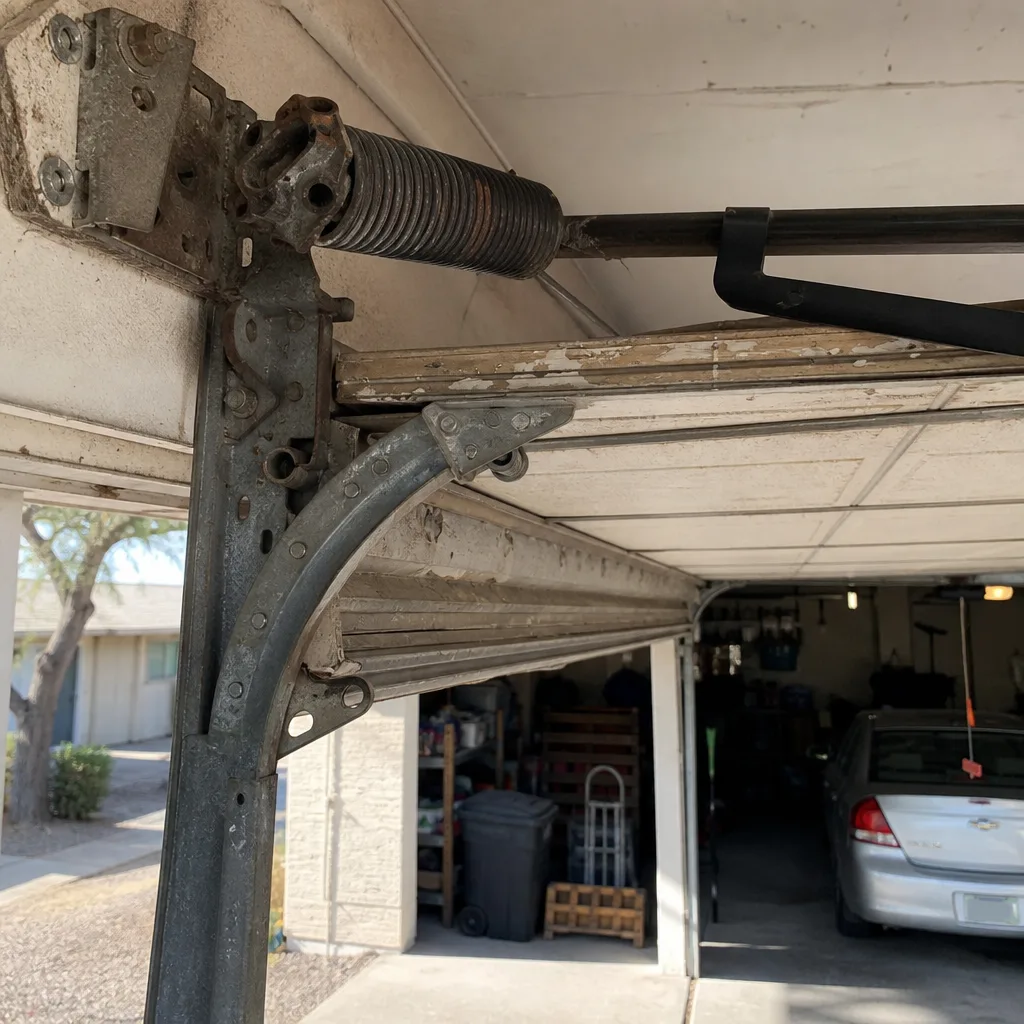 Before
 After
AfterGarage Door Warning Signs: A Mesa Homeowner’s Reference Guide
Most garage door warning-signs articles read like a parts catalog with adjectives: noisy this, sagging that, worn the other thing. What they skip is the only question that matters when you’re standing in your driveway at 6:40 a.m. on a Tuesday: can I still open this door, or am I about to make it worse? This guide answers that question for every sign we see in Mesa garages, from the Eastmark subdivisions to the Dobson Ranch originals built in the 1970s. For a deeper dive into overall care, see our The Complete Guide to Garage Door in Mesa. You’ll learn which symptoms mean stop operating the door immediately, which ones can wait two weeks for a scheduled visit, and which ones belong in a maintenance log rather than a work order.
Quick Answer
The warning sign that matters most is a broken torsion spring, which sounds like a gunshot from inside the garage and makes the door impossible to lift safely. If you hear that sound, or see a snapped cable or visibly bent track, do not operate the door and call (520) 391-9660 today. Most other warning signs, from slow reversal to grinding rollers, can be monitored or scheduled within two weeks, and a few are normal behaviors that only need a photo in your maintenance log.
Table of Contents
- Tier 1: Do Not Operate the Door. Call Today.
- Tier 2: Monitor and Schedule Within Two Weeks
- Tier 3: Log It and Watch It
- The Three-Tier Severity Framework: How to Think About Any Garage Door Symptom
- What Your Garage Door Is Saying: Audio Signatures of Roller Wear, Spring Fatigue, and Opener Slip
- Why Mesa Monsoon Season Creates Its Own Set of Warning Signs
- How to Photograph and Document a Warning Sign Before You Call Anyone
- The Decision Log: A Maintenance Record That Follows Your Home
- Common Mistakes to Avoid
- When to Call a Professional
- Frequently Asked Questions
- The Bottom Line
BeforeAfterTier 1: Do Not Operate the Door. Call Today.
Tier 1 signs are mechanical failures, not warnings. The distinction matters because operating a door with a broken spring, snapped cable, or bent track turns a $200 repair into a $1,200 replacement, and occasionally turns a heavy door into a falling object. A standard two-car garage door weighs between 130 and 400 pounds depending on material and insulation. That weight is counterbalanced by the torsion spring system, not by the opener motor. When the spring fails, the opener is left trying to lift the full weight, which it was never designed to do.
Broken Torsion Spring
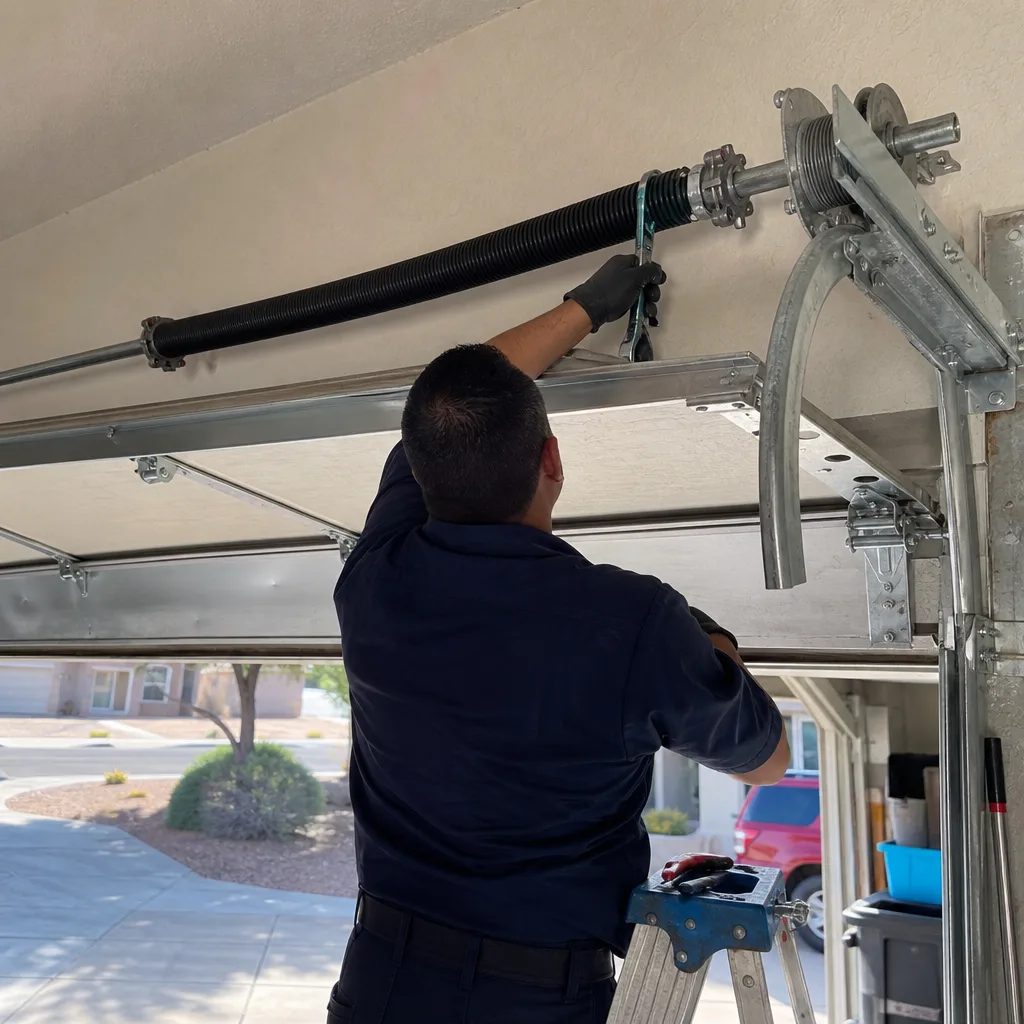
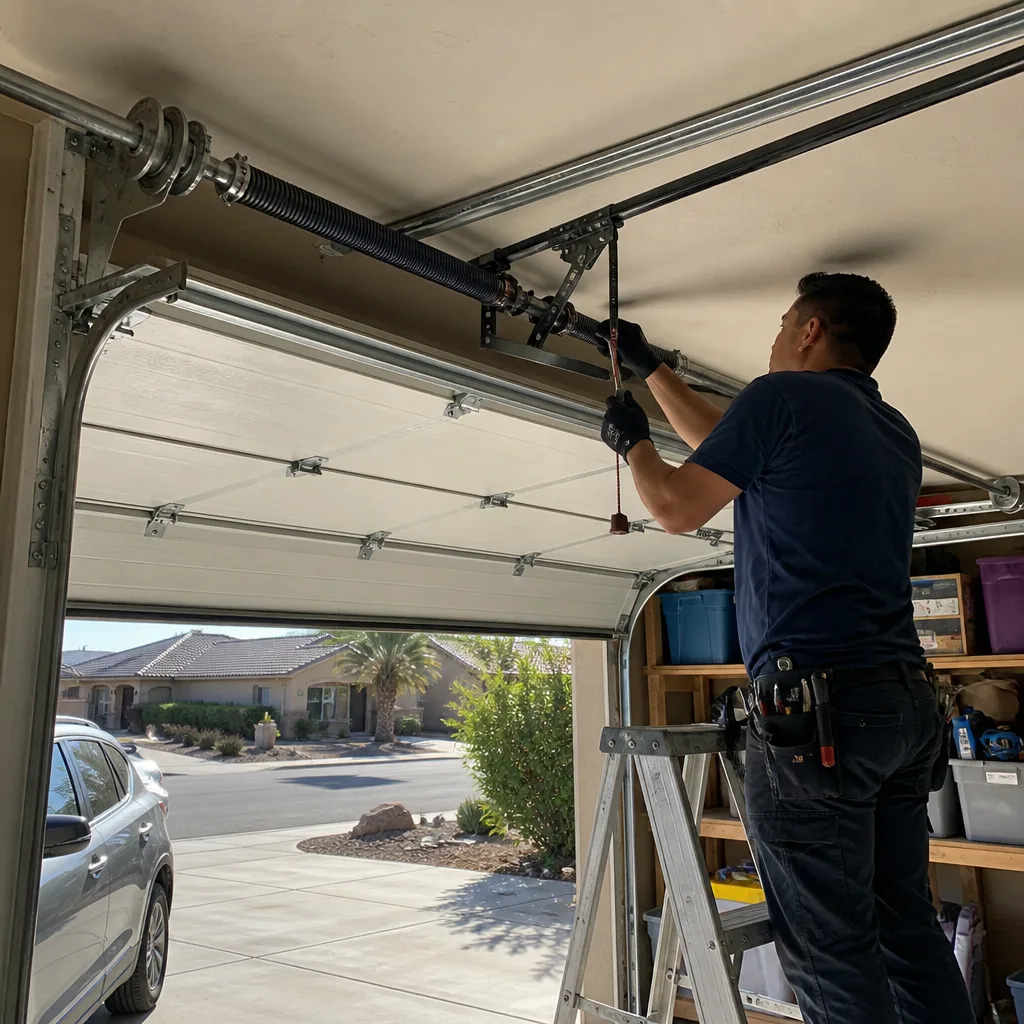
The torsion spring is the long, coiled spring mounted on a metal shaft above the closed door. In Mesa homes, these springs typically last 7 to 10 years, or roughly 10,000 cycles, whichever comes first. A cycle is one full open-and-close. Homes in the Power Ranch or Las Sendas areas where residents park in the garage and use the door as their front entrance burn cycles faster than homes where the garage is storage.
How you know it’s broken: a loud bang from the garage that sounds like someone dropped a crowbar on concrete. Then the door won’t lift, or lifts only a few inches and stops. Sometimes the door lifts if you push the opener button and help it manually, which is exactly what you should not do. If you look at the spring itself, you’ll see a visible gap in the coil, often with rough, freshly exposed metal at the break point.
What to do: stop operating the door. Disconnect the opener by pulling the red emergency release handle only if you need to secure the garage for the night, and understand that the door will be extremely heavy and may slam if not supported. Then call a technician. Spring replacement in Mesa typically runs $180 to $340 per spring for a standard residential door, and most garages have two springs that should be replaced as a pair even if only one broke. A technician should be able to tell you over the phone whether one or both need replacement, and should quote you a written, flat price before arriving. This is also where the topic of garage door safety demands a caveat: torsion springs are under enough tension to cause serious injury. Do not attempt to remove, adjust, or replace one without training and the correct winding bars.
Snapped Cable
The steel cables run along both sides of the door, from the bottom bracket up to the drum at the top. Their job is to transfer the spring’s energy to the door panels and keep the door level as it travels. When a cable snaps, the door immediately loses balance on one side.
How you know it’s snapped: the door visibly tilts when opening, or one side rises while the other side stalls. You may see a frayed or dangling cable hanging inside the garage track. In some cases the door continues to operate but makes a scraping sound as the unbalanced roller rides against the track. That scraping sound is metal meeting metal, and it is doing damage every time you run the opener.
What to do: do not operate the door. A snapped cable often means the spring system has failed or is about to, and the remaining cable may be under abnormal load. Call a technician. In our experience in Mesa, cable failures are frequently accompanied by spring fatigue, which means the fix is not just a new cable, it’s a new cable plus spring balance correction. A competent technician will check both.
Bent Track
The track is the formed metal rail that the rollers travel in, on both the vertical side sections and the horizontal sections mounted to your garage ceiling. Mesa garages take more abuse than most homeowners realize: monsoon-season microbursts can rattle a door against its tracks, and a single impact from a car bumper or a clumsy moving dolly can bend a vertical track enough to derail the door.
How you know it’s bent: the door hesitates or jams at roughly the same point in its travel every time. You may see a visible gap between the roller and the track, or a bright, polished scrape mark where the roller is carving into the metal. Sometimes the door makes a clunk and the opener reverses because the safety system detects an obstruction that is actually the track itself.
What to do: stop using the door. A bent track is a structural failure, not a tuning issue. The door can bind, jump the track, or drop if the roller escapes the channel. Track repair or replacement is a same-day job for a prepared technician, but it should not be postponed because the door is now an unpredictably moving object.
We should note here that any of these three failures is covered under our Garage Door Repair in Mesa service, and the first thing we do is document the failed component, because you should see the broken part before you approve the replacement.
Tier 2: Monitor and Schedule Within Two Weeks
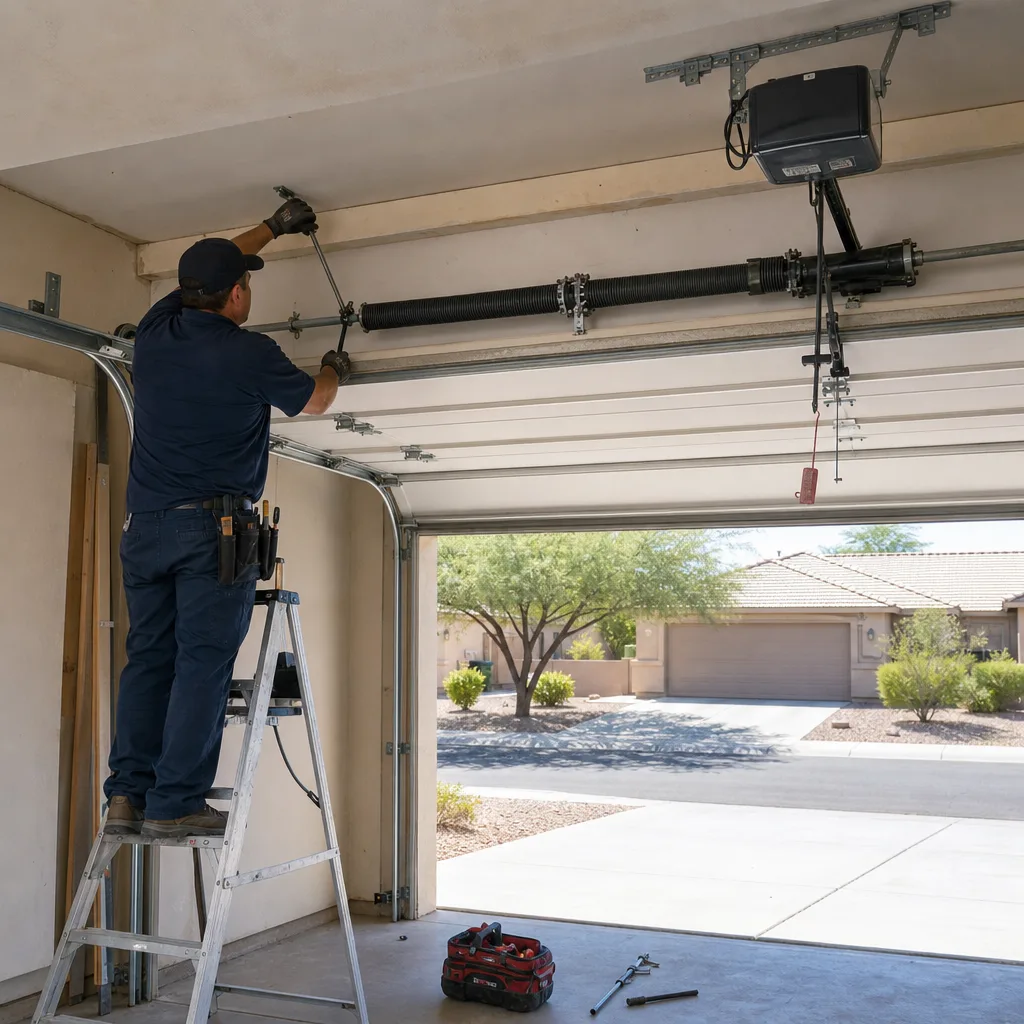
Tier 2 signs are progressive wear indicators. They do not mean the door will fail tonight, but they mean something is degrading, and the cost of that degradation increases with time. Scheduling within two weeks is the right window for a Mesa homeowner: long enough to coordinate a visit, short enough that a Tier 2 condition doesn’t have time to become a Tier 1 failure. Our Seasonal Garage Door Care for Mesa: Year-Round Homeowner’s Guide can help you time these visits strategically.
Slow or Hesitant Reversal
Every opener manufactured after 1993 has a safety reversal system: when the door encounters resistance while closing, it stops and reverses. A door that reverses occasionally, or reverses after a pause, is behaving differently from a door that refuses to close at all. The distinction is the difference between a sensor alignment issue and a failing logic board.
Misaligned safety sensors are the most common cause of a reversing door, and the fix is frequently a no-cost adjustment: the two sensors mounted on the lower door track on each side need to face each other and have a clear line of sight. Dust, spider webs, and direct Mesa afternoon sunlight angled into the sensor lens can all trigger false reversals. Cleaning the lens and verifying alignment takes five minutes and costs nothing but your time. If the door continues to reverse with clean, aligned sensors, the issue is deeper: a failing logic board in the opener, which on LiftMaster and Genie units we service typically runs $180 to $320 to replace. A technician can distinguish between these two conditions with a multimeter in about fifteen minutes, and that distinction is exactly what a warning-signs list should tell you to ask about.
Grinding Roller Noise
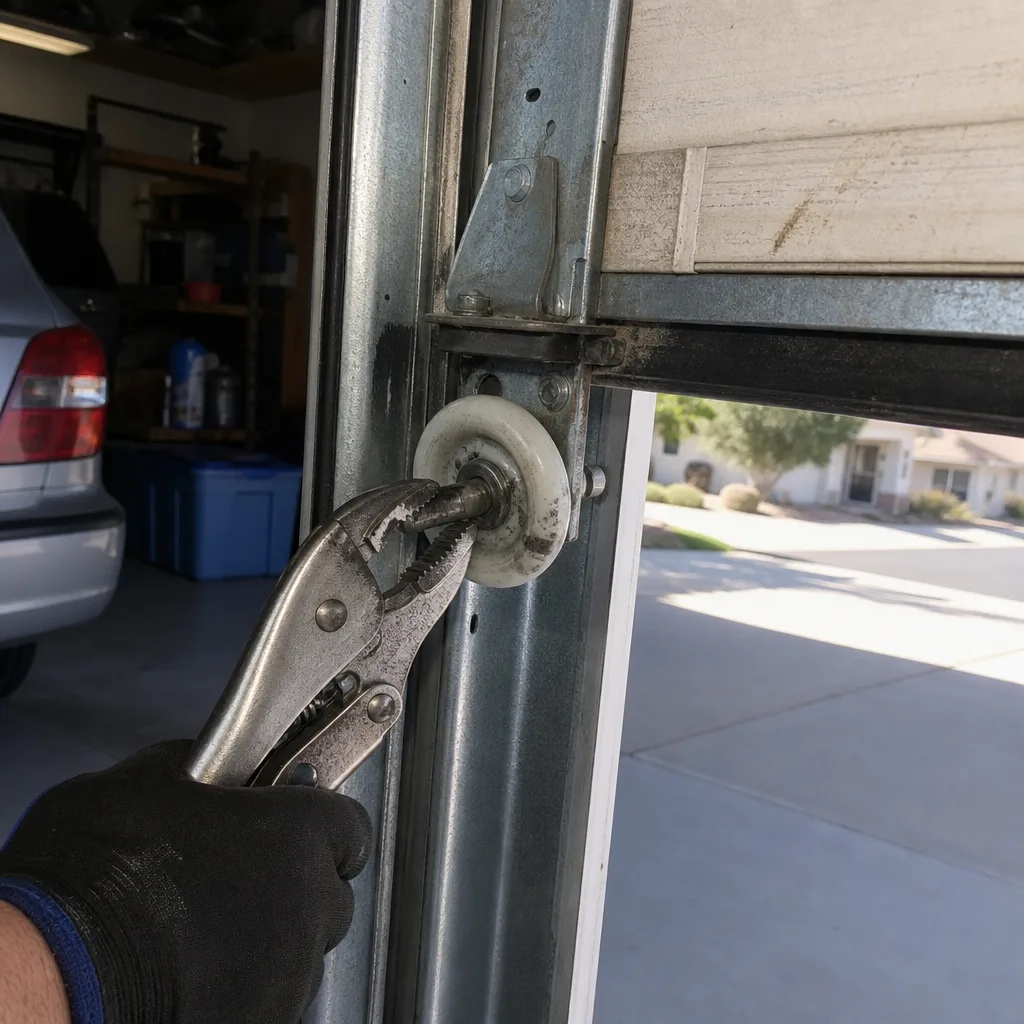
Rollers are the small wheels that carry the door along the track. Most Mesa homes still have their original steel rollers, which contain ball bearings that eventually dry out, wear flat, or seize. A roller that no longer rolls is a steel wheel dragging along a steel track, which sounds like grinding and is slowly destroying both surfaces.
The sound to listen for is a coarse, metallic scraping that follows the door as it moves, louder on one side than the other. Worn rollers are a Tier 2 sign because they degrade gradually: the sound gets louder over weeks, and the fix is straightdollar, not urgent. Replacing a full set of rollers on a double garage door in Mesa typically runs $140 to $220 including parts and labor, with nylon rollers carrying a slight premium over steel and running noticeably quieter. Scheduling this within two weeks is appropriate. Scheduling it within two months is procrastination that will cost you a new set of tracks.
Worn Bottom Seal
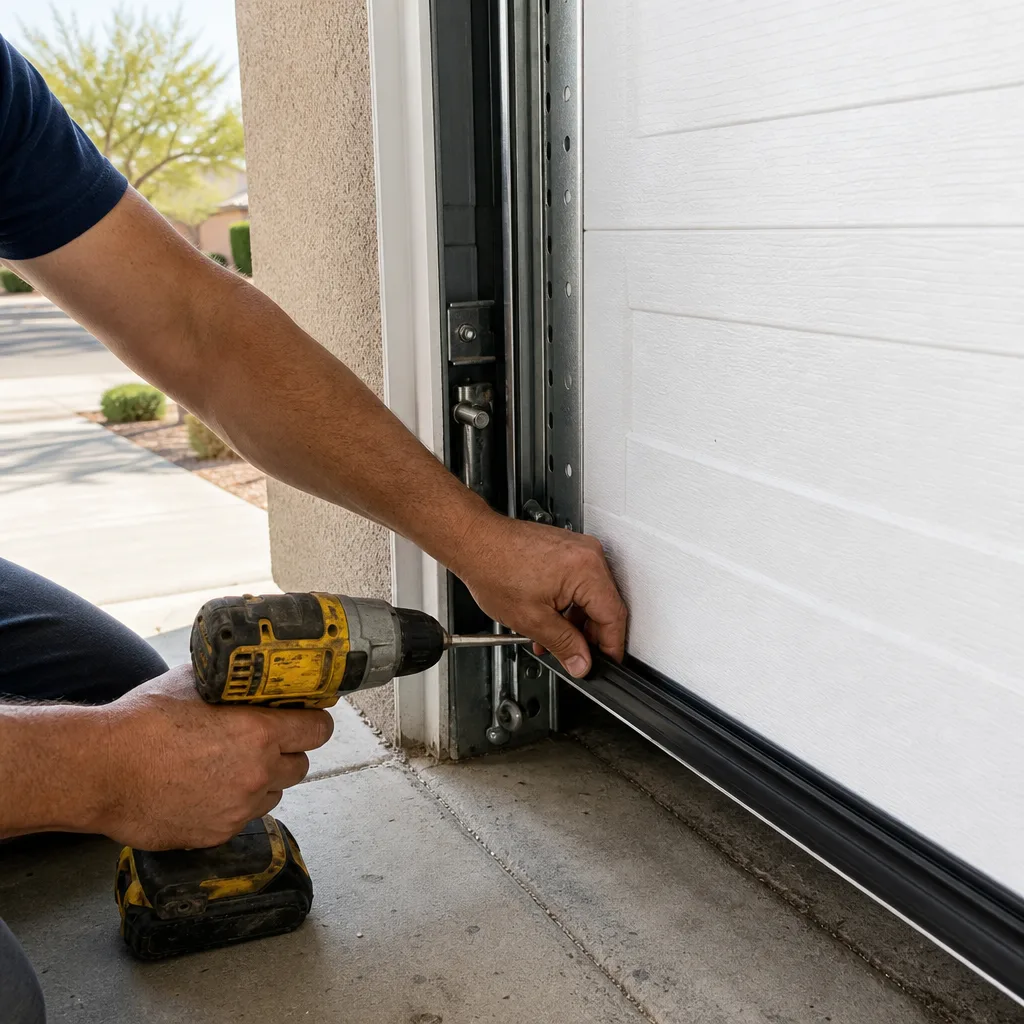
The bottom seal is the rubber or vinyl strip that runs along the bottom edge of the door panel. Its job is to keep water, dust, and pests out of the garage. In Mesa, the seal’s chief enemy is UV degradation and monsoon-wash grit. A cracked, flattened, or torn seal is a Tier 2 sign because it fails progressively, but it matters more here than in most climates for a specific reason: monsoon rain pools against the door and finds its way inside, and the haboob dust that coats every East Valley garage finds its way into your stored belongings.
Replacing a bottom seal is straightforward and inexpensive, typically $70 to $110 for parts and labor on a standard 16-foot door. The indicator to watch for is visible daylight under the closed door at the corners, which means the seal has compressed beyond function. If you’re not sure whether your seal is functional, close the door at noon and look for light. If you see it, schedule the replacement.
Tier 3: Log It and Watch It
Tier 3 signs are the ones most warning-signs lists treat as alarms, which is precisely why homeowners stop trusting those lists. Minor vibration, seasonal noise, and small panel dents are normal behavior for a mechanical system operating in a desert climate with hundred-degree temperature swings. The right response is documentation and observation, not repair.
Minor Vibration During Operation
Every garage door vibrates. The question is whether the vibration is new, whether it is getting worse, and whether it is accompanied by another sign. A door that has vibrated slightly for six years and still opens smoothly is a door in normal condition. A door that began vibrating noticeably last week and is now also reversing midway is a door that needs Tier 2 attention. Log the date you first noticed the vibration, note whether it changes with temperature, and re-evaluate in a month. If it is stable, keep watching. If it is progressing, move it up a tier.
Slight Weather Noise, Especially After Monsoon Events
Mesa’s monsoon season runs from mid-June through September, and it produces microbursts, dust storms, and rapid humidity swings that affect every exterior mechanical system on your home. A garage door that creaks or groans during or immediately after a major storm is often responding to transient conditions: dust in the track, thermal expansion of the metal, a door that got pushed slightly out of alignment by wind pressure and will settle back. This is not a repair condition, this is a weather event. Wipe the track with a dry cloth, note the date in your log, and check again in two weeks. If the noise persists in clear, dry conditions, it is mechanical, not meteorological, and it belongs in Tier 2.
Small Dents or Cosmetic Panel Damage
Hail is rare in central Mesa but not unheard of during strong monsoon cells, and the occasional ball, bicycle handle, or wind-blown branch finds every garage door eventually. A small dent that does not affect panel fit or roller alignment is a cosmetic issue with a cosmetic timeline: fix it when you’re doing other work, or leave it. The test is operational. If the door opens and closes smoothly and the dent does not cause the panel to catch on the adjacent panel or the track, it is Tier 3. If the dent has altered the panel seam so that water or dust enters, it is Tier 2, because a compromised seam in a Mesa garage becomes a passive dust and water inlet every time the wind blows.
The Three-Tier Severity Framework: How to Think About Any Garage Door Symptom
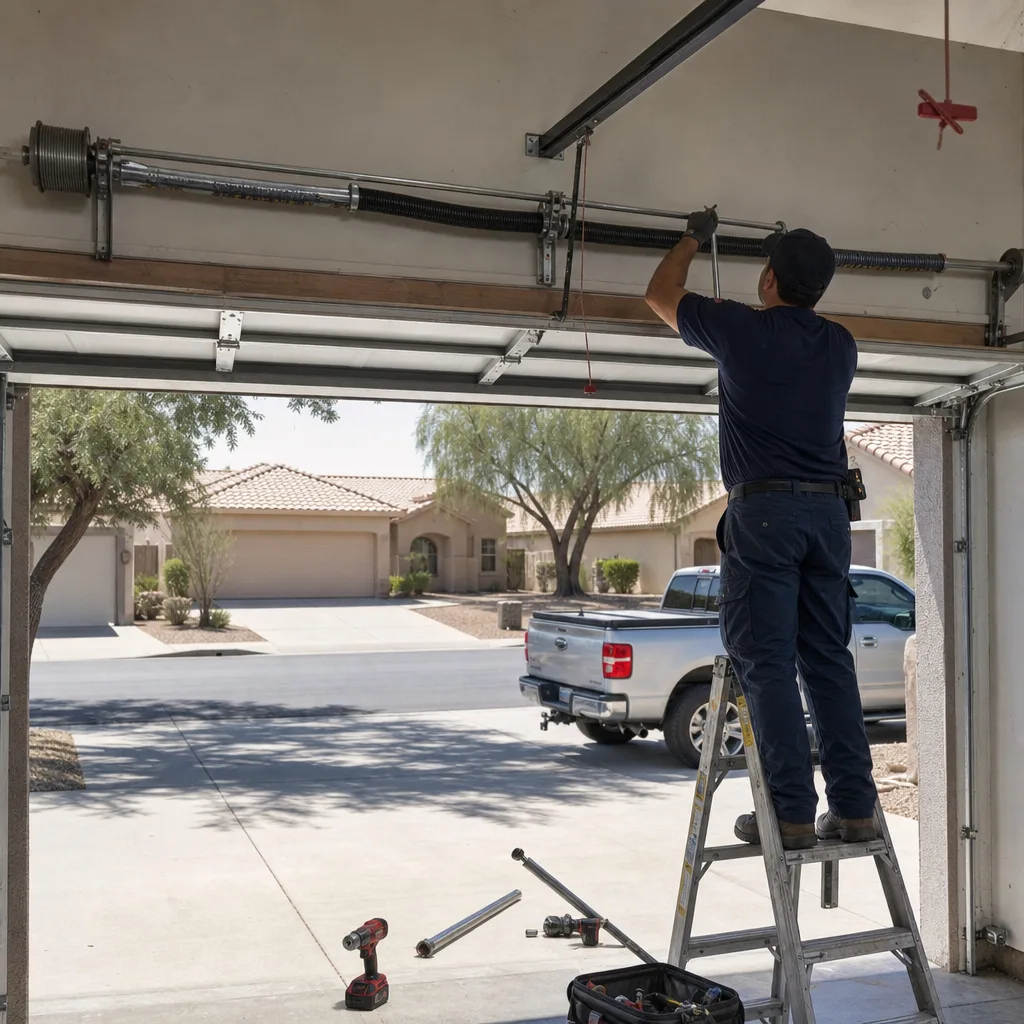
We introduced the tiers above. Here is the framework in one place, because the goal of this guide is not to memorize a list of symptoms. The goal is to have a decision procedure that works on any symptom, including ones we haven’t listed.
- Ask what happens if you do nothing. A broken spring gets worse only if you operate the door. A worn roller gets worse whether you operate the door or not. A cosmetic dent stays the same. Understanding the failure curve tells you the urgency.
- Ask whether the symptom is mechanical or environmental. In Mesa, a significant portion of garage door noise complaints are environmental: dust, humidity swings, and thermal expansion. Environmental symptoms are transient and should be logged, not repaired.
- Ask whether the symptom changes under a specific condition. A reversing door that only reverses at dusk is likely a sensor problem, because dusk is when sunlight hits the sensor lens at the lowest angle. A door that only makes noise when opening is likely a roller problem. A door that only makes noise when closing is often a seal or track contact issue. Specific conditions are diagnostic clues.
- Apply the tier. Tier 1: stop operating the door today. Tier 2: schedule within two weeks. Tier 3: log the date, the symptom, and a photo reference, then re-check monthly.
This framework is what we use when homeowners call us for a second opinion on a door they were told was unsafe. We ask the same questions, apply the same tiers, and quote the same written price before we touch anything. The procedure is documented in our Garage Door Installation in Mesa process, and it applies equally to a one-spring replacement and a full door conversion.
What Your Garage Door Is Saying: Audio Signatures of Roller Wear, Spring Fatigue, and Opener Slip
You do not need to be a technician to distinguish the three most common sources of garage door noise. You need to know what to listen for, because each sound corresponds to a different failure mode with a different cost and a different urgency. Here is what each one sounds like in a typical Mesa garage.
The Grind: Worn Rollers
A grind is broadband: it contains rough, coarse frequencies that sound like sandpaper on metal or a shopping cart with a bad wheel. It is louder when the door is in motion and changes in pitch as the door passes through different sections of track. The key diagnostic is that the sound follows the door, not the opener motor. If you stand in the garage and the noise moves from the track on your left to the track overhead as the door rises, that is rollers. Replacement cost: $140 to $220 for a full set on a double door. Timeline: Tier 2.
The Squeal or Shriek: Spring Fatigue
A squeal is high-frequency, focused, and often intermittent. It is the sound of a torsion spring’s coils rubbing against each other as the spring winds and unwinds under tension. On doors from Craftsman-era tract-home construction or early-2000s Wayne Dalton installs, spring squeal is common after five to seven years of service and is often mistaken for a roller problem. The diagnostic: a spring squeal occurs even when the door is moving slowly, and it is loudest near the spring shaft above the door rather than along the track. In Mesa’s summer heat, the metal expands and the squeal often fades after the first few cycles of the morning, then returns in the evening as the garage cools. Spring lubrication is a temporary mitigation. Spring replacement is the permanent fix, and it is the one repair on this list where we say flatly: this job belongs with a trained professional, not as a weekend project.
The Clack or Rattle: Opener Chain or Belt Slip
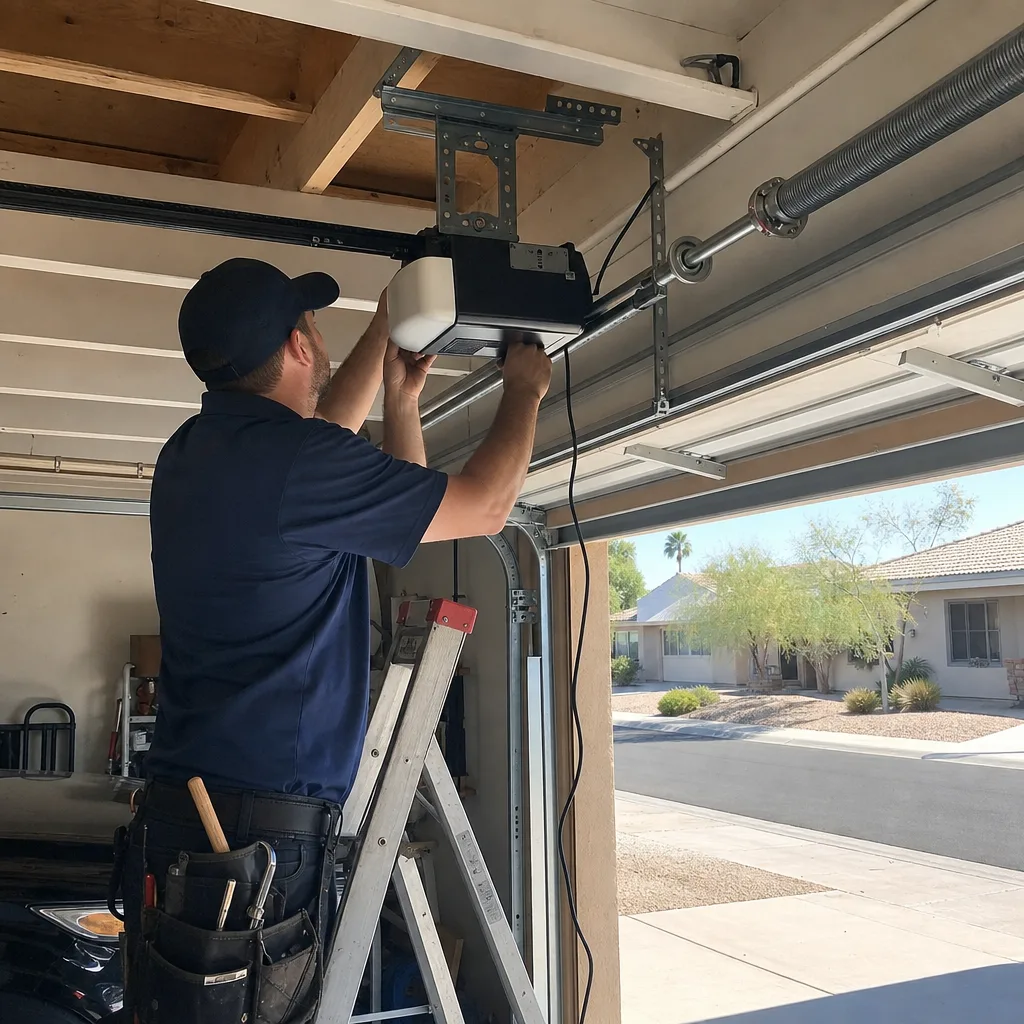
A clack is a sharp, percussive sound that repeats at a regular interval, often about once per second, independent of door position. It is the sound of an opener chain that has stretched beyond spec, or a belt that has lost tension, and the connector links are slapping against the rail or the opener housing. On Raynor and LiftMaster openers, a loose chain is frequently accompanied by a door that starts smoothly and then shudders at the midpoint of travel. The diagnostic: the clack continues even when the door is near fully open, which rules out track or roller issues that are position-specific. Fix: chain tension adjustment or belt replacement. Timeline: Tier 2. Cost: $90 to $160 for adjustment or belt replacement depending on the opener model.
Each of these sounds is a diagnosis waiting to happen. The Garage Door Opener Repair & Installation in Mesa work we do starts with the same question: what does it sound like, and has that sound changed?
Why Mesa Monsoon Season Creates Its Own Set of Warning Signs
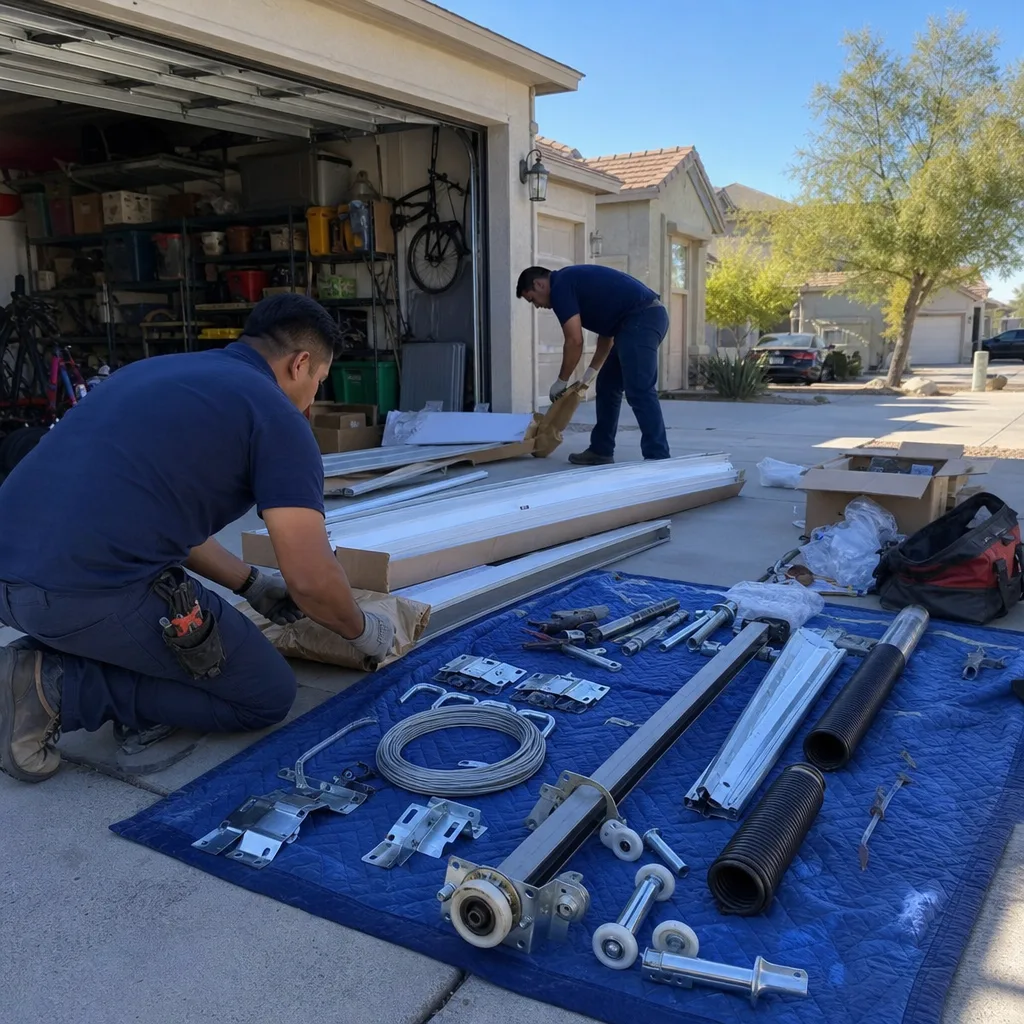
Monsoon season in Mesa is not a mild weather pattern. It is a series of microbursts, dust walls, and flash-humidity events that subject your garage door to conditions it was never designed around. A door that operates silently for eleven months can develop three distinct symptoms between July and September, and the most useful thing a Mesa homeowner can learn is which of those symptoms are permanent.
Dust-Driven Roller and Track Noise
Haboob dust is fine, abrasive, and electrostatic: it clings to lubricated surfaces and forms a grinding paste on rollers and track. The result is a door that suddenly sounds gravelly in August and September. This is a maintenance condition, not a repair. Cleaning the track and rollers thoroughly and re-lubricating with a dry silicone spray typically resolves the noise. If the noise persists after cleaning, the dust has accelerated wear on the roller bearings, and the rollers are now the repair.
Humidity-Related Swelling and Seal Shift
Monsoon humidity pushes through the garage door’s weatherstripping and can cause the bottom seal to swell, especially on older rubber seals that have lost their resilience. A swollen seal often makes the door hesitate at the bottom of its travel, as if the opener is making a slight extra effort to close. This is frequently misread as a force-setting problem on the opener. It is not. Swollen seals return to near-normal after the humidity drops, and if they don’t, replacement is the right call. A visual inspection tells you which condition you have.
Misalignment from Wind Pressure and Debris
A strong microburst can press a garage door inward with enough force to flex the track slightly or knock debris into the sensor path. The symptoms that follow are a door that reverses at random intervals, or a sensor that blinks and needs a reset. The diagnostic question is whether the misalignment is recent and storm-associated or progressive and mechanical. A door that was perfectly balanced before the storm and reversed twice after it is likely environmental. A door that has been reversing occasionally for six weeks and got worse after the storm is mechanical. The distinction determines whether you log it or schedule it.
Monsoon-related symptoms are the single most common reason Mesa homeowners call us in September, and the most common outcome is that nothing is broken. A thorough cleaning, a sensor re-alignment, and a 15-minute balance check are all that’s required. We do the same work whether the call is a panic or a routine visit, and the customer gets the same photo record either way.
How to Photograph and Document a Warning Sign Before You Call Anyone
The single most useful thing you can do before calling a technician is take photographs. Not one photograph. Not a video of the door moving. A specific set of still images that show a technician the component, the failure, and the surrounding context. This is not about proving anything to the technician. It is about creating a record, and it is the same practice we built our documentation system around in 2015: if you can see the failed part, the diagnosis is no longer a matter of trust.
- Photograph the spring shaft and both springs. Stand on a ladder or step stool and shoot straight down the shaft at eye level. Capture the gap in the coil if one spring is broken, and capture the unbroken spring as well so the technician can see the wire diameter and coil spacing. A straight-on shot of the mounting bracket is also useful.
- Photograph both cables, full length. Start at the bottom bracket, where the cable attaches to the door, and shoot the full length up to the drum, which is the spool at the top of the shaft. Fraying at either end is the common failure point. A flash photo in a dark garage will show broken wire strands that are invisible in daylight.
- Photograph each roller in its track. Get close enough that the roller wheel and its axle are visible. If a roller has a flat spot or a missing bearing, the still photo will reveal it even if the door has to be moved slightly to expose it.
- Photograph the track itself, especially the suspect sections. Shoot parallel to the track so the bend or gap is visible against the straight line of the opposite wall or the ceiling. A bent track hides in wide-angle shots.
- Photograph the opener and its rail. Capture the model number label, which is usually on the opener body or the rail, and a full-length shot of the chain or belt. Technicians can quote parts without this, but the quote is more accurate with it.
- Photograph the garage interior from the driveway. One wide shot that shows the door, the tracks on both sides, the spring line, and the opener. This gives the technician your garage’s geometry, not just the suspected part.
When you call a technician, mention that you have these photographs. A company that works from photographs before arriving is a company that wants to quote you a documented price, not make up a number while standing in your driveway. That distinction is Clause 1 of The Haven Standard: a flat, written price and written scope before any work starts. The technician sees the photos, identifies the likely cause, and arrives with the right parts and a written price already prepared.
The Decision Log: A Maintenance Record That Follows Your Home
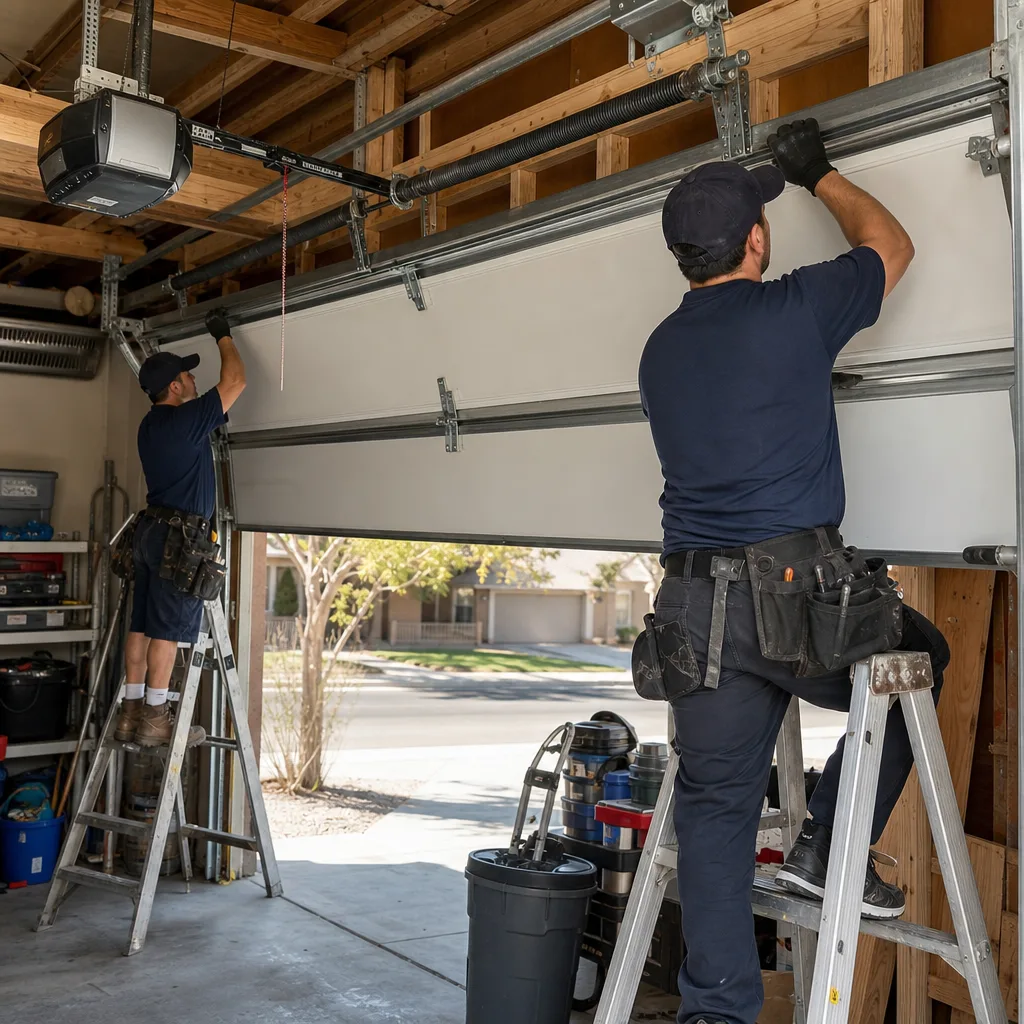
Most Mesa homeowners have no record of what has been done to their garage door, when, or by whom. That record has value: it helps a technician diagnose current problems, it prevents you from paying for the same repair twice, and it becomes a selling point when you list the home. A decision log takes ten minutes to start and five minutes per entry to maintain.
What to Include
- Date. The day you observed the symptom.
- Symptom description. One or two sentences, specific: “grinding noise from left track, loudest near bottom roller, first noticed after monsoon dust on July 18.”
- Photo reference. The filename or cloud link of the photographs you took, so you, or a future homeowner, can find the images.
- Action taken. “Cleaned track, noise resolved” or “Called technician, rollers replaced on August 2, $190, written warranty provided.”
- Tier assignment. Your current classification: Tier 1, 2, or 3.
- Follow-up date. When you plan to re-check, or when the technician’s warranty expires.
Why It Matters for Resale
A Mesa home sold in 2026 will transfer more information than a home sold in 2016. Buyers in the 32-to-50 age band who bought their first house between 2015 and 2025 are the same buyers you’ll be selling to in ten years, and they read three-star reviews, ask for documentation, and will pay a small premium for a home with a maintenance record. A garage door decision log is a small piece of that record, but it signals something larger: this home was maintained by someone who documented decisions instead of guessing. If that sounds like a realtor’s pitch, it is. And it is accurate.
Common Mistakes to Avoid
- Operating a door with a broken spring. It is the single most expensive mistake a Mesa homeowner can make, because the opener motor was never designed to lift the full door weight, and every cycle with a broken spring is a cycle of unnecessary wear on the motor, the cables, and the remaining spring. Do not test the door to see if it still works. A broken spring is a stop condition, not a test condition.
- Lubricating a broken or failing component as a substitute for repair. A noisy roller is not a dry roller. It is a roller with worn bearings, and grease will buy you a week of quiet while you grind the track into a replacement job. Lubrication is maintenance for healthy components, not repair for failed ones.
- Ignoring a reversing door because it “fixed itself.” A door that reverses weekly and then behaves for ten days is a door with an intermittent sensor or logic board fault. Intermittent faults do not heal. They become permanent at the worst possible moment, which in Mesa is usually the first hot afternoon after you’ve parked in the garage for a week.
- Using a universal remote as a diagnostic tool. A door that responds erratically to one remote may be a remote problem, not a door problem. Test the wall button before calling a technician. The wall button bypasses the radio signal entirely, and if the door works from the wall button every time, the issue is the remote, not the opener.
- Assuming a loud door is a broken door. Most noise complaints we respond to in Mesa are maintenance conditions: dust in the track, a dry seal, a chain that needs tension. A loud door is not a reason to panic. It is a reason to diagnose. The tier framework tells you which one you have.
- Not photographing the failure before the technician arrives. If the technician sees a part that you did not see, you are being told, not shown. At Servo Garage Doors Mesa, Clause 4 is why the technician photographs the failed part before quoting a replacement: you see what we saw, and the documentation is yours. If your technician won’t do this, that is information about the technician.
- Waiting until the door fails completely to find a company. The worst time to research a garage door repair company is during an emergency. The second-worst time is after you’ve been quoted a number that doesn’t match your research. Look at the Servo Garage Doors Mesa home page before you need it, or at least before you need it urgently, and save the number.
When to Call a Professional
Call a professional the moment you have a Tier 1 sign: a loud bang from the garage, a snapped cable, a visibly bent track, or any door that will not open or close safely. Call within two weeks if you have a Tier 2 sign that is getting louder, more frequent, or more noticeable with each cycle. Call for a second opinion if a technician has told you that a Tier 3 sign requires immediate replacement, because that recommendation is either a misdiagnosis or an upsell, and neither should cost you money. Servo Garage Doors Mesa offers free estimates in Mesa, and our Free Second Opinion applies to any written estimate from another company. Call (520) 391-9660 with your photos, your log, and your questions, or explore more guides & resources on our blog before you call.
Frequently Asked Questions
A broken torsion spring replacement in Mesa typically costs between $180 and $340 per spring, with most residential garages requiring two springs, and the written price should be provided before any work begins. Call (520) 391-9660 with a photo of the spring shaft and we’ll quote you a flat, written price from the photograph.
For Tier 1 failures, a broken spring, snapped cable, or bent track, yes, we carry standard springs, cables, and track sections on the truck and can typically complete the repair same-day. Live phone coverage is available 24 hours a day, 7 days a week, including holidays, and an emergency call is answered by a real person, not a recording.
No. The written price is the price. Clause 1 of The Haven Standard requires a flat, written price and written scope before any work starts, and if the diagnosis changes once we’re on site, the new price is also written and agreed before we touch anything. You are never surprised by an invoice.
For the most common Tier 1 and Tier 2 repairs in Mesa, yes: torsion springs in standard residential sizes, cables, rollers, seals, sensors, and opener belts and chains are stocked on the service vehicle. Special-order panels or uncommon door brands may require a return visit, and that is communicated in the written scope before we schedule.
Yes. Minor vibration during operation, the sound of the door expanding in summer heat, and dust-related noise after monsoon events are normal for Mesa garage doors and should be logged, not repaired. A noise that is new, progressive, or position-specific, meaning it always happens at the same point in the door’s travel, is worth a diagnostic call.
The Haven Standard is the written operating standard that Servo Garage Doors Mesa works to, and it includes Clause 1, a flat written price before any work begins, and Clause 4, the documented photo record of what was found and what was done. It exists so that the promises on this page are not a handshake. If it is not right, the 365-Day Done Right Promise means we make it right.
The Bottom Line
The purpose of this guide was to give you a decision procedure, not a parts list. The three-tier framework answers the question every warning-signs article skips: whether you can still operate the door. Tier 1 means stop and call today. Tier 2 means schedule within two weeks. Tier 3 means log it, photograph it, and watch it. Take the photographs before you call anyone, start the decision log tonight, and keep the number where you can find it at 7 a.m. on a workday. A garage door that is documented is a garage door that doesn’t surprise you.
Written by Marcus Deller, Owner at Servo Garage Doors Mesa, serving Mesa since 2015.