
Last updated September 20, 2026
Full 25-point door and opener safety check with every visit - springs, cables, rollers, tracks, and your LiftMaster or Chamberlain opener included
You get a price before we start. It does not change when the truck arrives.
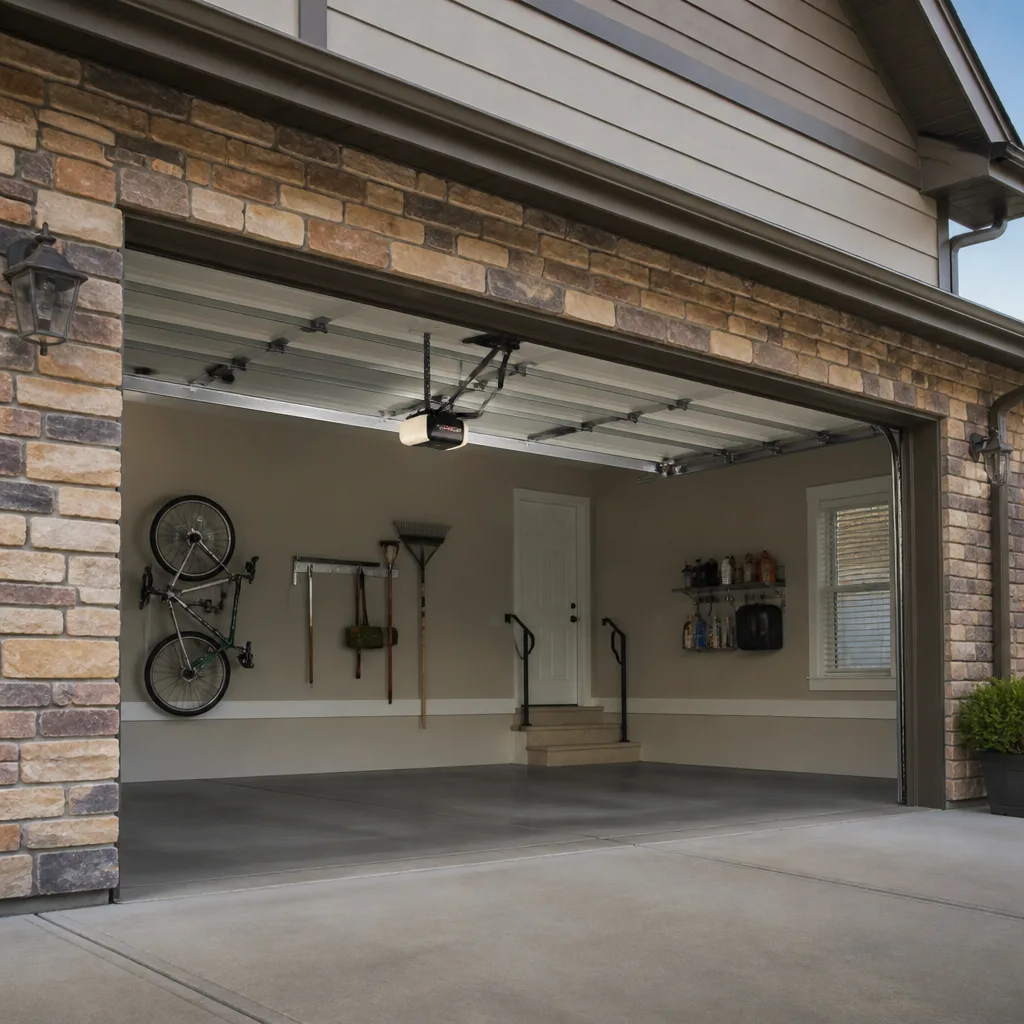
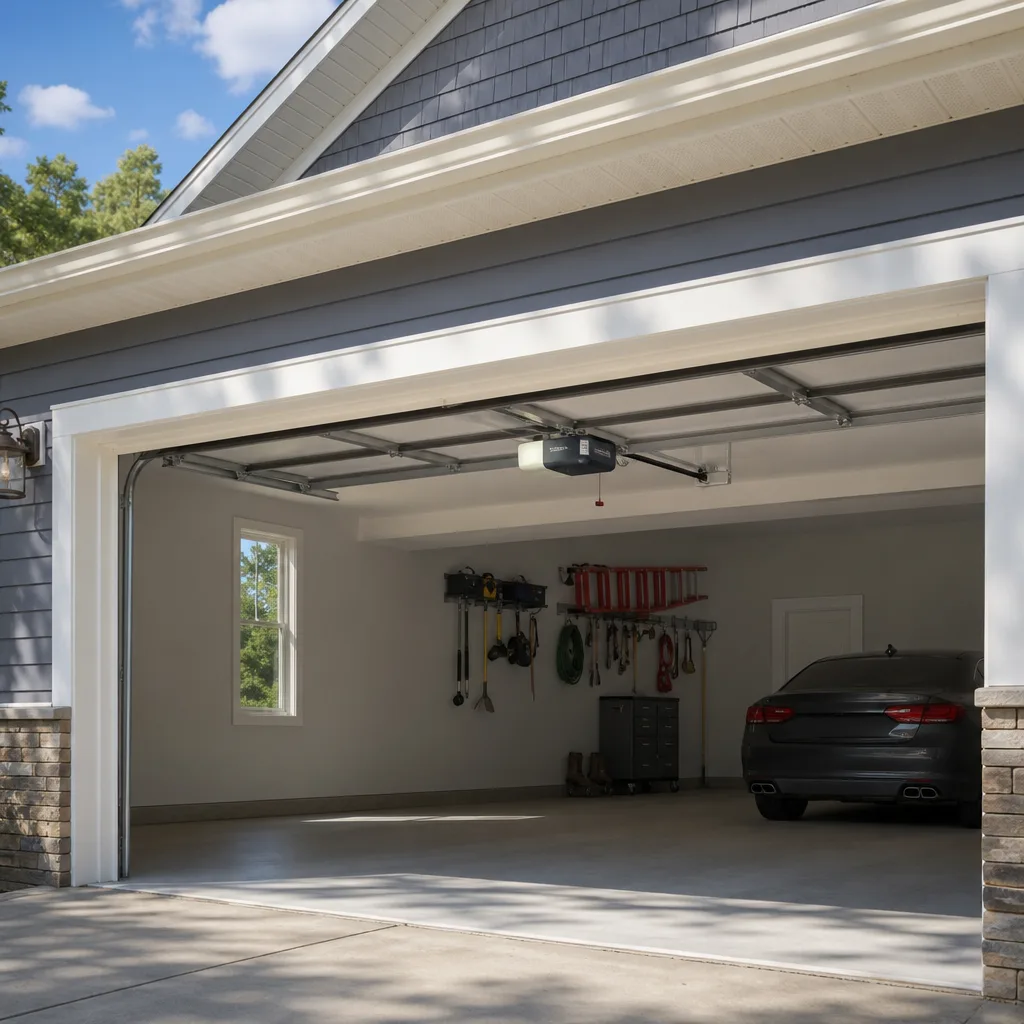
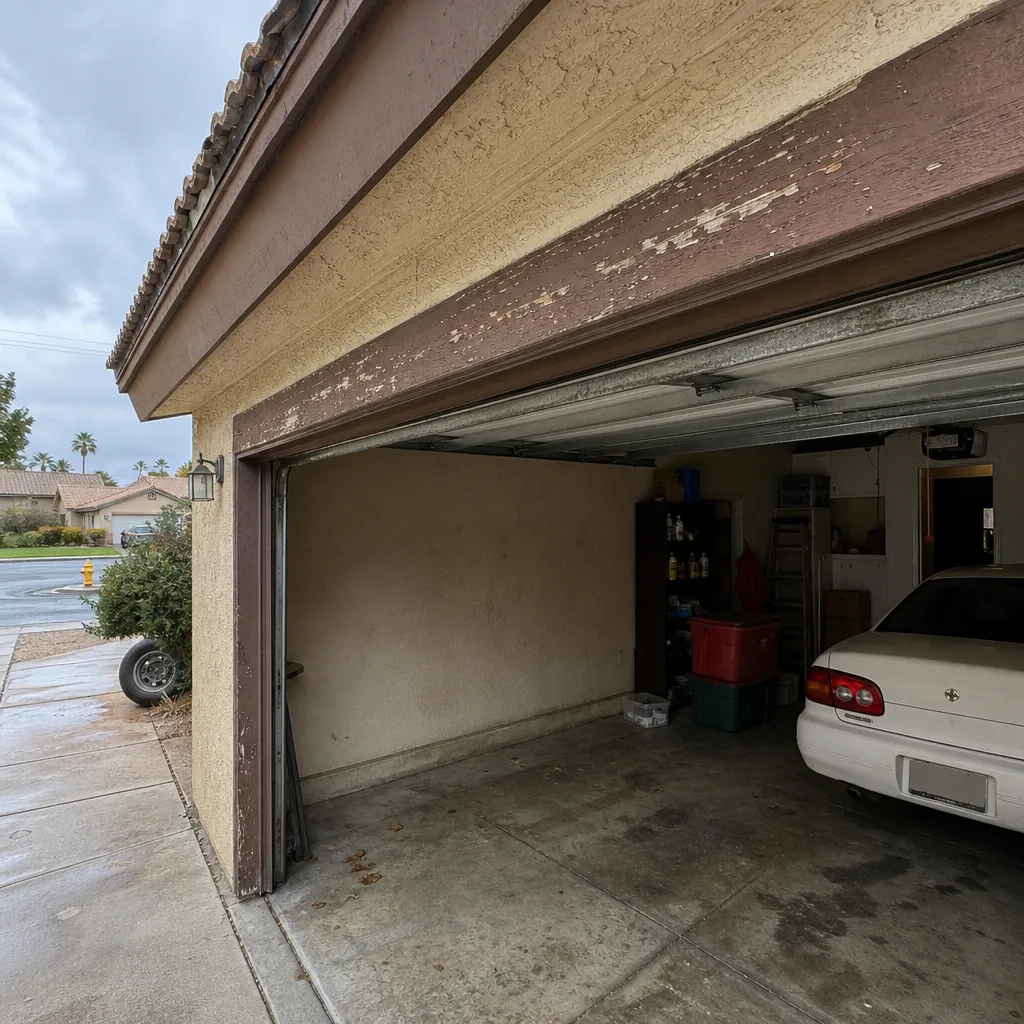 Before
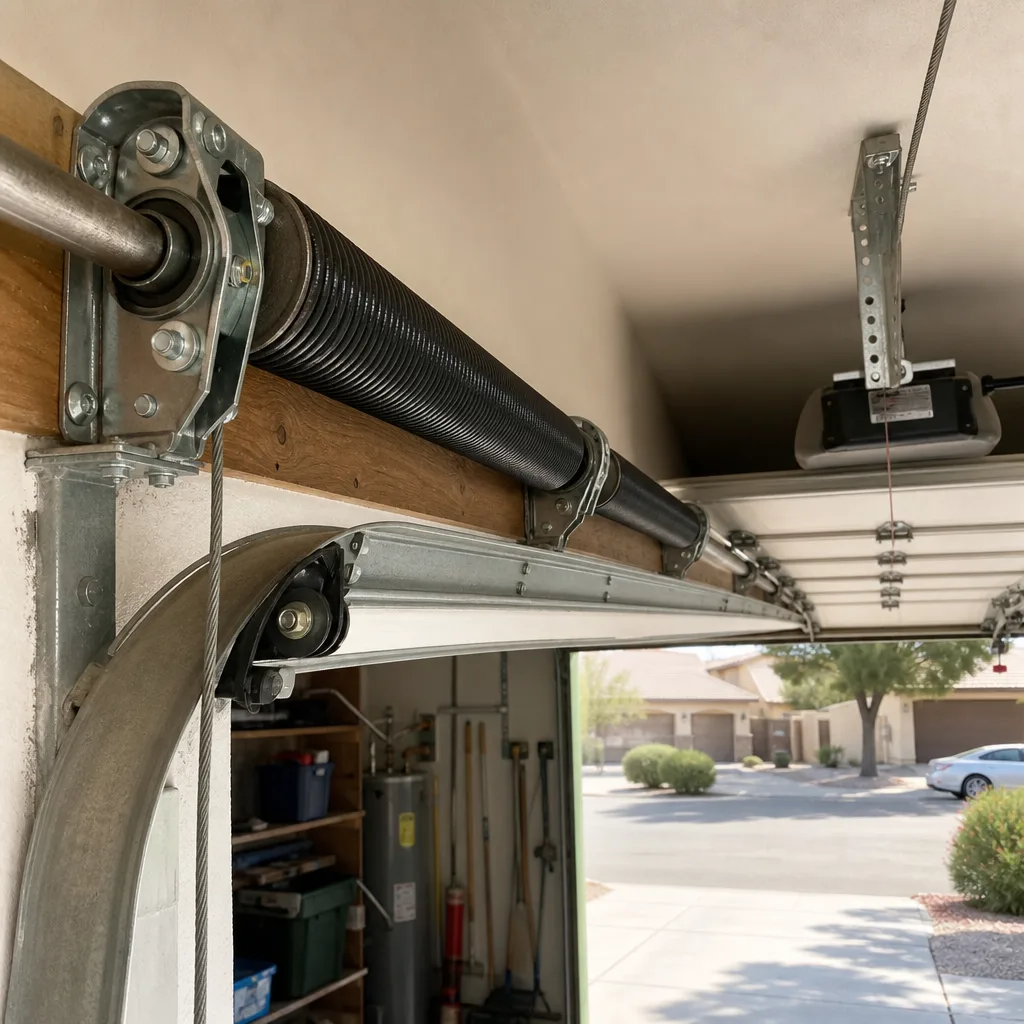 After
After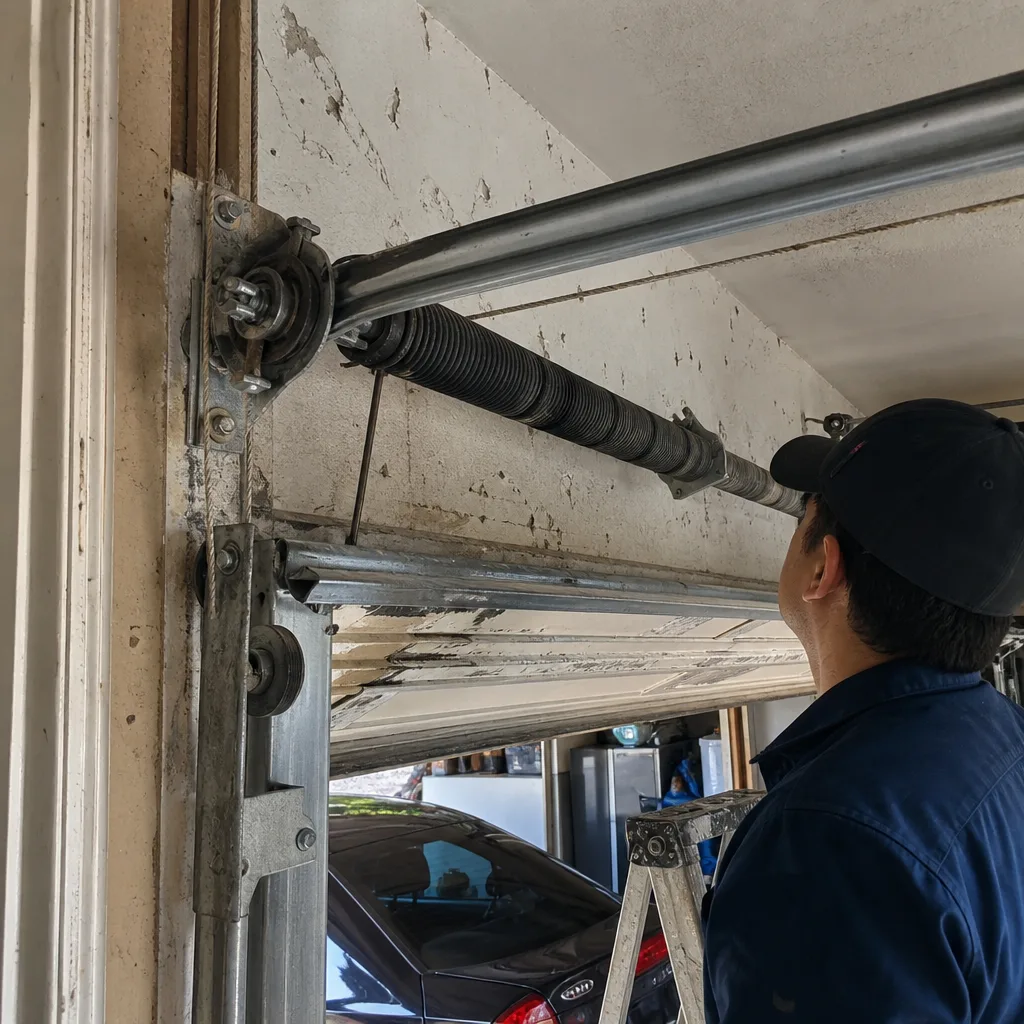 Before
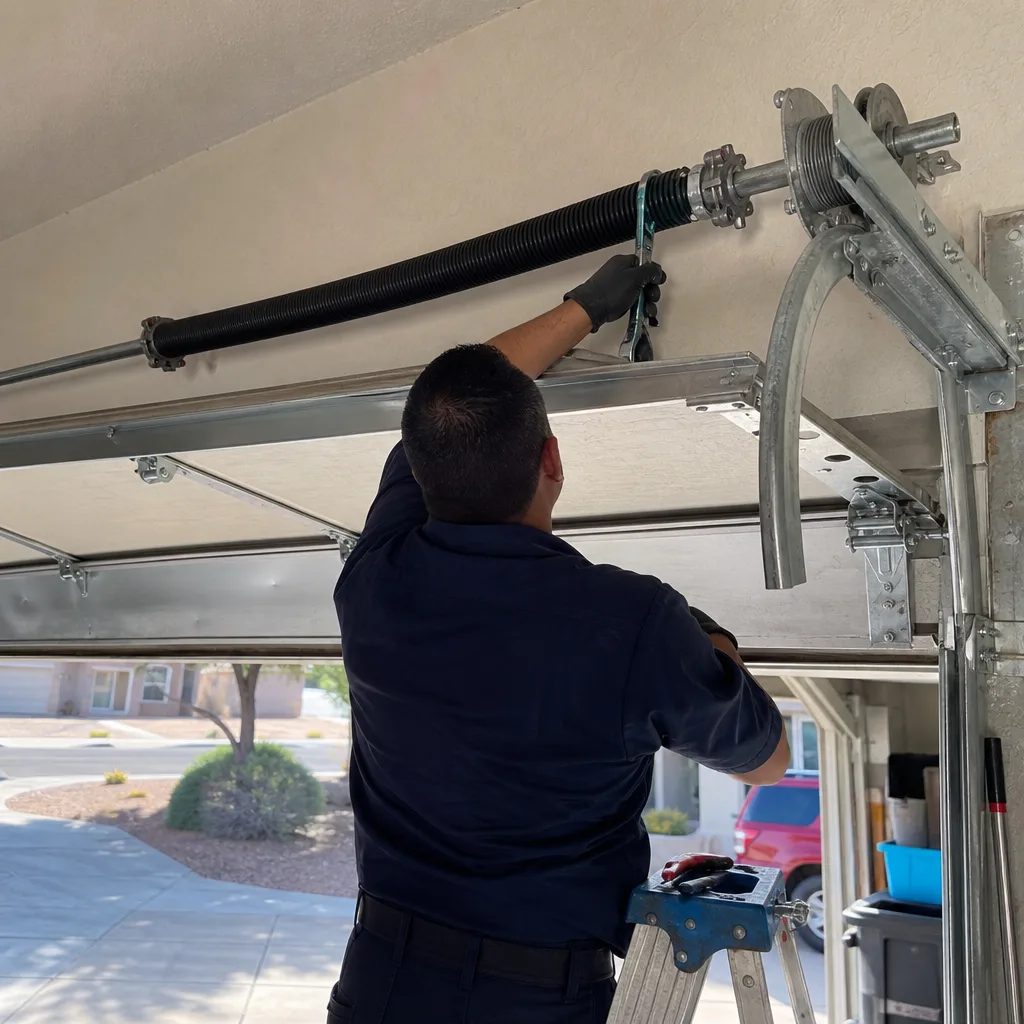 After
After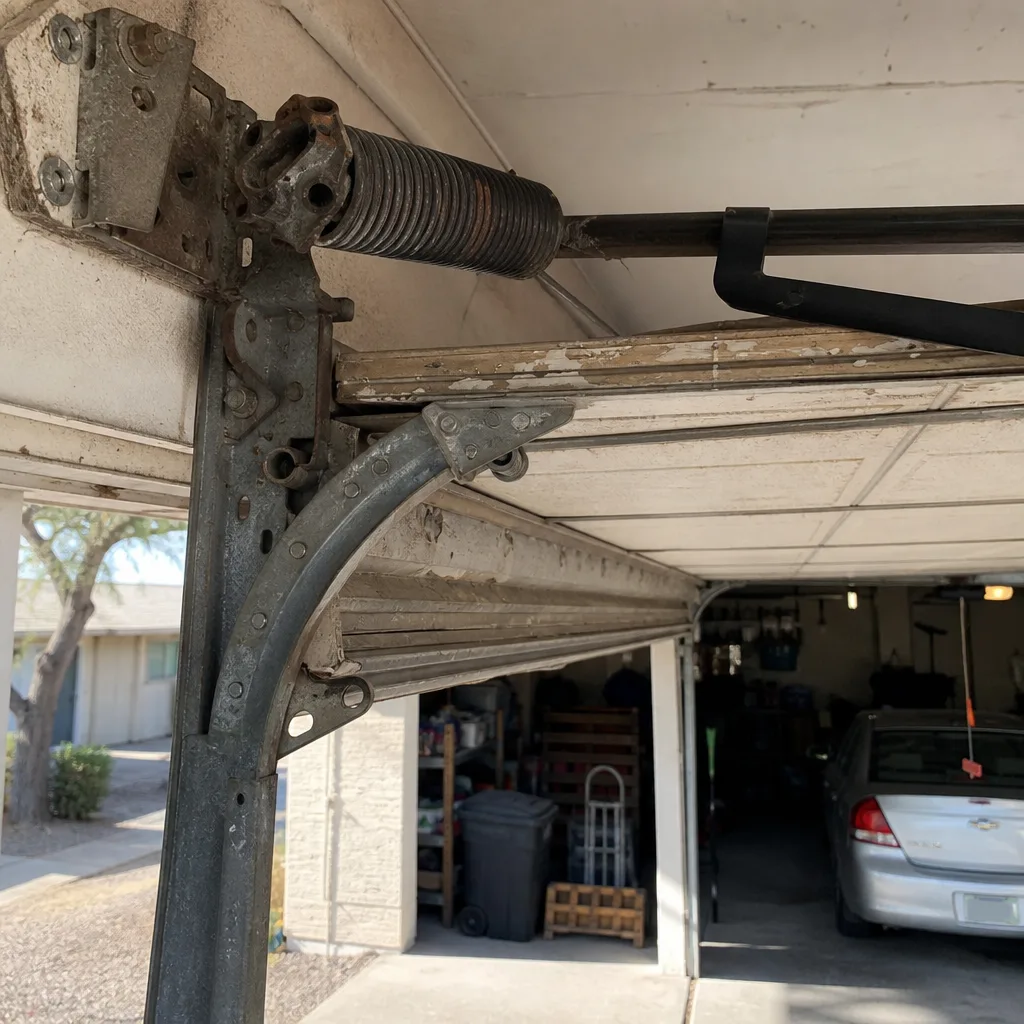 Before
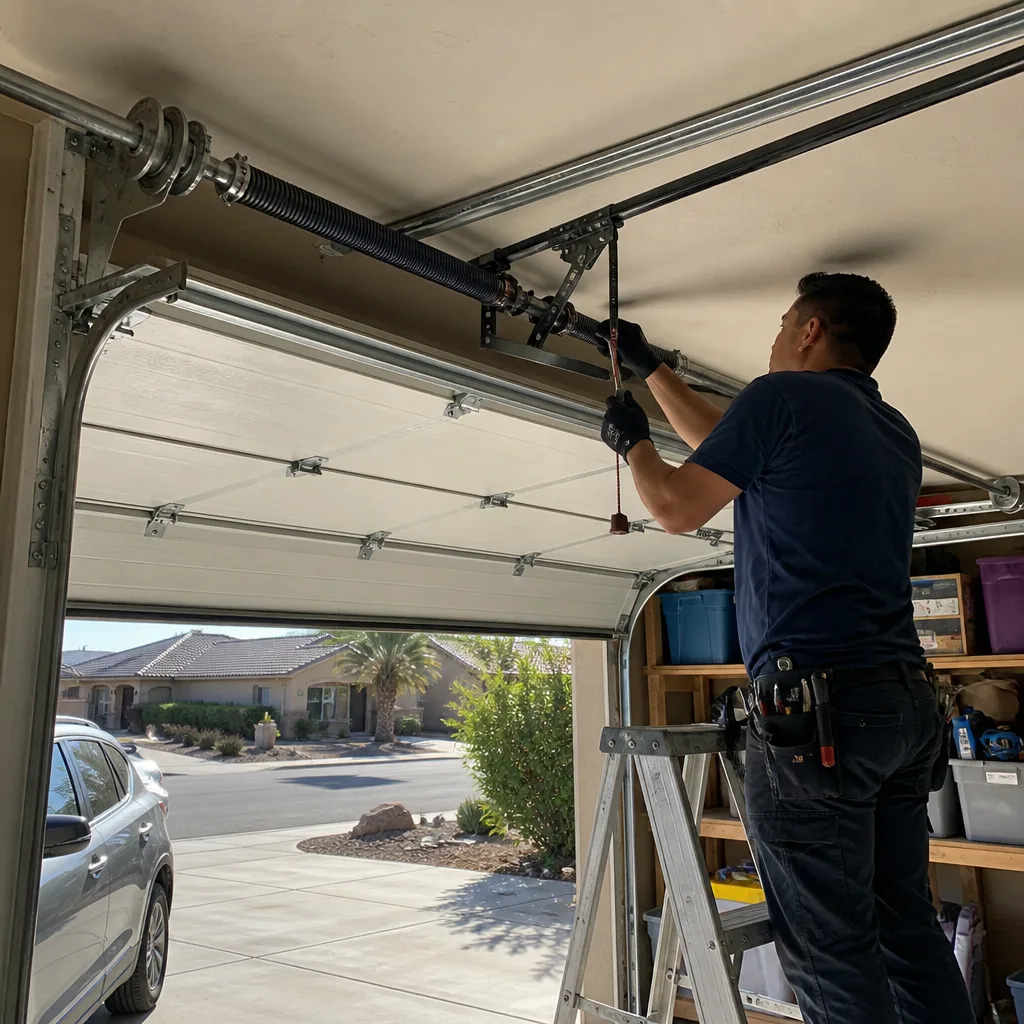 After
AfterHow to Hire a Garage Door Contractor in Mesa: A Step-by-Step Guide
Most homeowners in Mesa assume the hard part is finding a licensed contractor. It isn’t. Arizona’s Registrar of Contractors database resolves that question in under a minute, and most garage door companies operating in Maricopa County carry a valid ROC number. The real failure point is what happens after the license checks out: a verbal price, a handshake scope, and an invoice that bears no resemblance to either. This guide walks through the exact documents to request, the specific questions to ask, and the red flags that separate a contractor who prices in writing from one who prices by feel. For more guides & resources on protecting your home investment, see our blog. If you’re hiring a garage door contractor in Mesa, the goal is simple: get the scope and the dollar amount on paper before any tool comes off the truck.
Quick Answer
To hire a garage door contractor in Mesa, verify their ROC license number against the Arizona Registrar of Contractors database, request proof of general liability insurance, and confirm in writing before scheduling that you’ll receive a flat, written price with a written scope of work before any repair or installation begins. The single most predictive question you can ask is whether the contractor will commit the price to paper on-site, before work, with no verbal-only exceptions. That one commitment filters out most of the contractors responsible for the disputes we hear about in Mesa.
Table of Contents
- Step 1: Verify the License Before the Phone Call Ends
- Step 2: Request the Three Documents Before Scheduling
- Step 3: Ask the Written-Price Question the Right Way
- Step 4: Read the Quote Line by Line
- Step 5: Ask What the Photo Record Looks Like
- Step 6: Evaluate Response Time Without Falling for Urgency
- Common Mistakes to Avoid
- When to Call a Professional
- Frequently Asked Questions
BeforeAfterStep 1: Verify the License Before the Phone Call Ends
Every legitimate garage door contractor in Arizona carries a license issued by the Arizona Registrar of Contractors. The search takes less than a minute. Go to the ROC website, enter the business name or license number, and confirm two things: the license is active and the classification covers garage door work. A handyman with a general repair license can legally handle some small tasks, but garage door installation and spring repair should sit under a classification that explicitly covers garage doors and related hardware.
Here’s the part most hiring guides skip: a license tells you the contractor passed a background check and carries a minimum bond. It tells you nothing about how that contractor structures pricing. We’ve seen licensed operators in Mesa write quotes on the back of a business card after a 90-second look at the door. That license is necessary but nowhere near sufficient. The Mesa market has plenty of licensed contractors who still quote verbally, and those are the jobs that end in disputes over what was agreed. Check the license first, then move to the document requests in Step 2.
While you’re verifying, look at how long the license has been active. A contractor who has held an Arizona license for eight or ten years has survived ROC complaint cycles and bond renewals. That doesn’t guarantee anything, but it does tell you the business has existed long enough to face consequences. One more thing worth checking: the business address on the license. If the address is a PO box or a home in another county, ask why. Some legitimate contractors operate lean, but a Mesa homeowner should at least know where the business is physically based.
For reference, Servo Garage Doors Mesa home operates under an active Arizona ROC license, and the license number appears on the estimate document, not just buried somewhere on a website. If a contractor hesitates when you ask for their ROC number on the phone, end the call. That’s not a negotiation point.
Step 2: Request the Three Documents Before Scheduling
Most homeowners ask for proof of insurance and stop there. That’s one document short of what actually protects you. Before you schedule a visit, request three things from any garage door contractor in Mesa:
- ROC license verification. You can pull this yourself from the Registrar of Contractors site, but ask the contractor for the license number on the phone. Their willingness to provide it in five seconds is itself a signal. A contractor who makes you search for it is telling you something about how they handle documentation.
- Proof of general liability insurance. Ask for a certificate of insurance with you named as the certificate holder. This takes most legitimate contractors one email to produce. If you’re installing a new door with a motor, the liability exposure is low compared to roofing or electrical, but you still want the paper. Garage door springs store enormous tension, and the technician working on your door should be covered by the company’s policy, not your homeowners insurance.
- A sample written quote from a prior job. This is the one almost nobody asks for, and it’s the most revealing. A written quote from a previous job shows you exactly what the contractor considers acceptable documentation. Does it name the specific part? Does it separate labor from materials? Does it include a written scope, or just a dollar figure with a line item that says “repair door”? You can learn more from a redacted prior quote than from forty online reviews.
The third request will occasionally confuse a contractor. That’s fine. Ask anyway. The ones who can produce a prior written estimate are the ones who produce written estimates as a matter of routine. The ones who can’t are the ones who will quote your spring replacement verbally and hope you don’t remember the number when the invoice prints.
In Mesa specifically, we also recommend confirming the contractor’s physical location. The East Valley has no shortage of operators who run a website and a Google listing with no actual shop or warehouse in the metro area. A contractor with inventory in Mesa can usually carry common parts on the truck. A contractor dispatching from across the county is more likely to leave mid-job to retrieve a part, or to quote a second visit fee.
Step 3: Ask the Written-Price Question the Right Way
The phrase “free estimate” appears in nearly every garage door ad in Mesa, and it means almost nothing. A free estimate can be a detailed written quote, or it can be a verbal number tossed out after a quick visual inspection. The difference decides whether your final invoice matches the opening conversation.
Here’s the specific sentence to say on the phone, and we recommend writing it down before you dial:
“Before I schedule anything, I want to confirm that I’ll receive a written price and a written scope of work on-site, before any repair or installation begins. Is that how you operate?”
Listen to the answer. A contractor who operates on written, upfront pricing will say some version of yes, that’s standard, we don’t start work without a signed approval. A contractor who relies on verbal estimates will hedge. You’ll hear something like “well, I can give you a number when I see it” or “sure, we’ll write something up if you want.” The hedge is the answer. In our experience serving Mesa homeowners, the contractors who pause at that question are the ones whose invoices drift.
The written-price commitment matters more for some repairs than others. A torsion spring replacement in Mesa typically runs $280 to $400 depending on spring size and door weight, and it’s a job where verbal estimates frequently expand. For seasonal maintenance that prevents these surprises, see our Seasonal Garage Door Care for Mesa: Year-Round Homeowner’s Guide. A full door installation is a bigger number, often $1,400 to $2,800 for a standard single door in the Mesa market, and the gap between verbal and written pricing there can reach four figures. Don’t accept “I’ll write it up after” on any job.
We operate under The Haven Standard for garage door repair in Mesa, and Clause 1 of that standard states that a flat, written price and written scope are delivered before any work begins. No exceptions. That’s not a marketing line. It’s the operational rule our technicians follow on every single job, and it’s why we can answer the written-price question in one sentence instead of three.
Step 4: Read the Quote Line by Line
A garage door quote is a small document, but its structure tells you how the contractor thinks about money. Here’s how to read one, line by line, before you sign anything.
Materials line. Does it name the specific part, or say “repair materials”? A quote that says “torsion spring replacement” is a material line. A quote that says “door fix” is a question mark. Look for brand names where relevant. If you’re getting a door installed, the quote should specify the manufacturer and model line: Amarr, Clopay, or Wayne Dalton, for example, along with the door size, material, insulation value, and panel style. Those four details are where installation quotes get blurry.
Labor line. This is where you learn how the contractor structures markup. A quote that says “labor included” typically means the contractor has built labor into the part price. A quote that separates “parts plus labor” is showing you their actual pricing structure. Neither is automatically better, but here’s the tell: if the labor line is vague, the final invoice has room to move. If the labor is a flat dollar figure tied to a specific task, you’re looking at a contractor who prices by scope rather than by the hour.
The scope block. The best quotes include a short written description of exactly what will be done. “Remove existing single-door torsion spring assembly, install new spring rated for 180-pound door, balance door, cycle test 10 times, lubricate rollers and hinges.” That’s a scope. If your quote has no scope block, write one yourself and ask the contractor to initial it before work starts. This single step eliminates most dispute scenarios in Mesa.
Disposal and cleanup. A new door installation generates an old door, old hardware, and packaging. Does the quote say who takes it away? If it doesn’t, assume you’re hauling a 150-pound door to the Mesa transfer station yourself. Ask the question before signing.
Payment terms. The quote should state what you owe and when. We recommend against paying in full before work begins on any job involving a door you expect to see installed that same day. A deposit on a custom-ordered door is standard, but the quote should state the dollar amount and what it covers in writing.
Step 5: Ask What the Photo Record Looks Like
Here’s the question almost no Mesa homeowner thinks to ask: what documentation do I receive after the job is done? The answer splits the market.
Most contractors hand you an invoice and leave. Some will walk you through what they did verbally, but by the time the door has been tested six times and the truck is backing out, most homeowners remember about 40% of what was said. The contractor who photographs the failed component before replacing it, and then photographs the completed work, is doing something fundamentally different. They’re giving you a record you can look at later, or show to a second opinion, or file with the home’s records.
This practice has a name in our operation. Clause 4 of The Haven Standard requires a documented photo record on every visit. The technician photographs the failed spring, the stripped gear, the cracked panel, whatever they found, before quoting a replacement. That photo is included in the written estimate. When the work is done, the completed installation is photographed, and you receive those images as part of your job record. It’s evidence of what was found and what was done, and it dates back to a founding rule at Servo: the customer sees the failed part before anyone quotes a replacement.
When you’re interviewing contractors in Mesa, ask this directly: “Do you photograph what you’re repairing before you quote it, and do I receive those photos?” The contractors who do will answer immediately, because it’s part of their workflow. The contractors who don’t will pause, and that pause is your answer.
Related: the same documentation standard applies to opener work. If you’re having a logic board or trolley carriage replaced, the technician should be able to show you the failed component. For more on what that process looks like, see our opener repair and installation service page for Mesa.
Step 6: Evaluate Response Time Without Falling for Urgency
Mesa is a sprawling city, and a garage door that won’t open isn’t just an inconvenience when it’s 108 degrees and the car is inside. Response time matters. But the way a contractor talks about response time tells you whether they respect your intelligence.
A legitimate contractor can give you a real answer: “We have a technician in the East Valley right now, I can have someone there by 2:00, and you’ll get a text with the name and truck description.” That’s specificity. That’s what a dispatch system sounds like. What you should reject is urgency theater: “We only have two slots left this week” or “Prices are going up next month so you really should decide today.” Mesa homeowners are too sharp for that. The company that pressures you to decide today on a spring replacement is the company that doesn’t want you to call around tomorrow.
Here’s a useful rule for the Mesa market: a company that can quote a specific arrival window and back it with a named technician is running a real operation. A company that can only promise “sometime this afternoon” is dispatching whoever’s free, if anyone is. Emergency garage door situations are different. If the door is stuck open and the house is unsecured, same-day response is a legitimate need, and you want a company that answers the phone at midnight with a person, not a recording.
That’s what Servo does. Calls are answered by a live person 24 hours a day, seven days a week, including holidays. Emergency calls get a named technician and an on-the-way text, not a four-hour callback window. And even on an emergency repair, the written price comes before the work. The urgency of the situation doesn’t suspend Clause 1.
Common Mistakes to Avoid
- Hiring without checking the ROC database. It’s a 60-second search that eliminates unlicensed operators and shows you any past complaints filed with the Registrar. Skipping it because the website looks polished is how homeowners in Mesa end up chasing a contractor who never had a license to lose.
- Accepting a verbal quote and expecting it to stick. A number said out loud isn’t a number agreed to. If it isn’t written, it doesn’t exist. This is the single most common regret we hear from Mesa homeowners who hire the wrong contractor first.
- Paying in full before the job starts. A deposit on a custom-ordered door from a manufacturer like Clopay or Amarr is reasonable. Full payment before work begins is not. The written scope exists to protect both parties, and the contractor who wants full payment upfront is telling you they don’t trust their own work.
- Falling for the “today only” discount. Garage door pricing doesn’t work on flash sales. If the spring replacement is $390 today but $450 tomorrow, ask what changes in 24 hours. Nothing does, and the discount is a pressure mechanism, not a savings.
- Not asking who handles the old door. Mesa transfer stations charge by volume, and a 16-foot door doesn’t fit in the family crossover. Confirm in the quote that removal and disposal are included, or budget for a separate haul.
- Skipping the photo question. You wouldn’t buy a car repair without seeing the old part. Your garage door is a heavy mechanical system under tension, and the contractor who won’t show you the failed component is asking for trust they haven’t earned.
- Breaking up with a contractor by text and never answering the follow-up call. If a contractor delivers a quote you don’t like, tell them. Mesa is a big city, but the garage door trade is smaller than you’d think, and ghosting a contractor who took the time to inspect your door is a quick way to get remembered for the wrong reasons.
When to Call a Professional
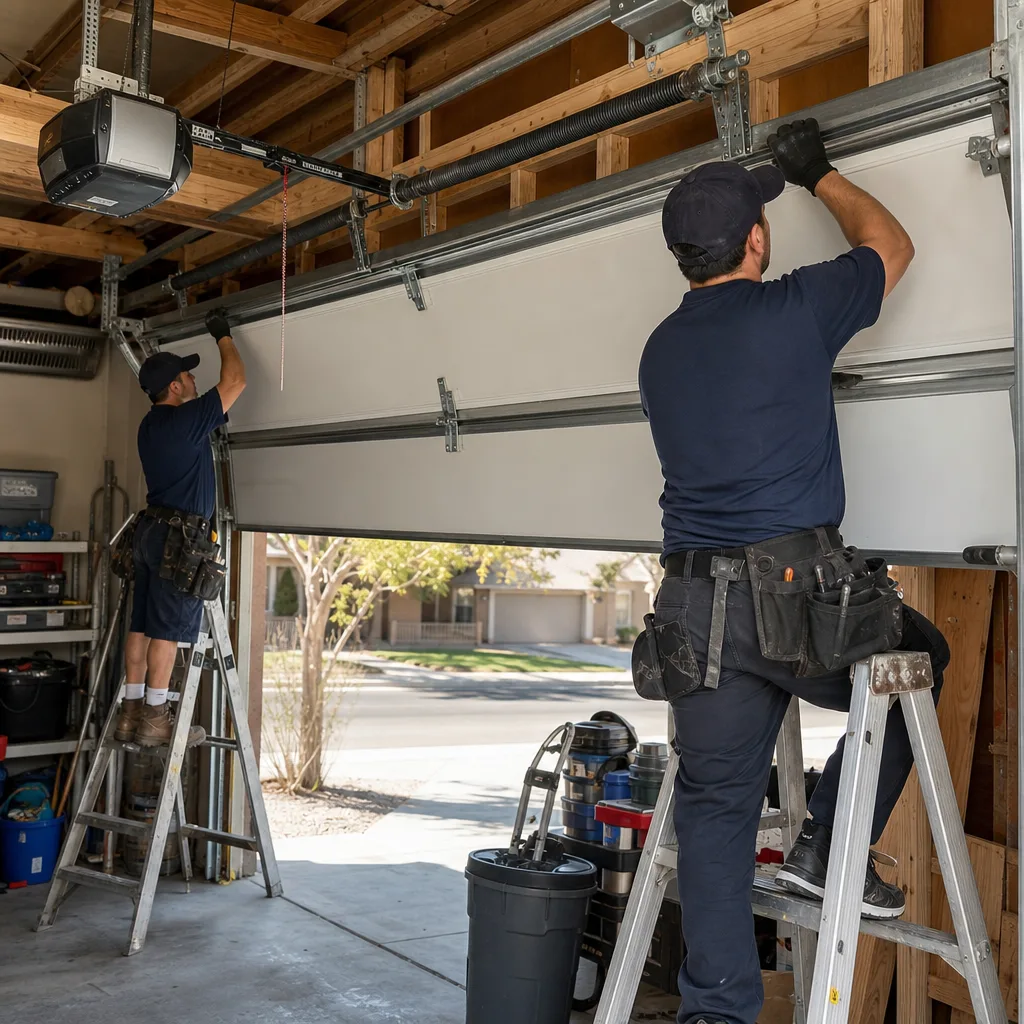
Some garage door tasks are genuinely dangerous. Torsion springs are wound under enough tension to seriously injure a person who attempts removal without the proper winding bars and training. Cable replacement involves the same tensioned system. If your door has a broken spring, a snapped cable, or a door that’s jumped its track, don’t attempt the repair yourself. The savings on a DIY spring replacement in Mesa evaporate the moment you’re in an urgent care waiting room explaining what happened. Garage door installation in Mesa is another job for professionals, particularly insulated doors in the Mesa market, where the summer sun turns a poorly installed door into a heat and energy problem.
Servo Garage Doors Mesa offers free estimates throughout Mesa, and the estimate includes a written price and written scope before any work begins. If you’re dealing with a door that won’t open, a spring that snapped, or you’re ready to price out a replacement, call (520) 391-9660. A live person answers.
Frequently Asked Questions
Garage door repair in Mesa typically runs $180 to $450 depending on the job. A torsion spring replacement usually lands between $280 and $400, an opener replacement between $350 and $700 installed, and a full single-door installation between $1,400 and $2,800 depending on material, insulation, and brand. These are written-price ranges, not verbal estimates. Call (520) 391-9660 for an exact quote on your specific door. Estimates are free.
Visit the Arizona Registrar of Contractors website and search the contractor’s name or license number. Confirm the license is active and the classification covers garage door work. Then ask the contractor for their ROC number on the phone before scheduling. If they can’t provide it in five seconds, that’s a signal.
A proper written quote includes a specific parts line with brand or model where applicable, a labor dollar figure tied to a specific task, a written scope block describing exactly what will be done, a disposal and cleanup note, and payment terms. If your quote lacks any of these, ask for them in writing before signing.
A good contractor won’t commit to a dollar figure before seeing the door, the spring type, the opener model, and the track condition. A phone quote without an inspection is a guess, and usually a low one designed to get the truck in your driveway. Expect an on-site inspection, a written quote, and approval before work starts. That’s how the written-price system works.
Bring it. Servo offers a free second opinion on any written estimate from another Mesa contractor. No coupon, no code, no fine print. If you have paperwork, bring it, and we’ll give you our read on whether the scope and price make sense. Call (520) 391-9660 to schedule.
Because without a photo, you have a contractor’s word and an invoice. With a photo, you have evidence of what failed and what was done. Clause 4 of The Haven Standard requires a documented photo record on every visit, and the photos are included in your job record. It’s the difference between trusting a summary and seeing the part that actually failed.
The Bottom Line
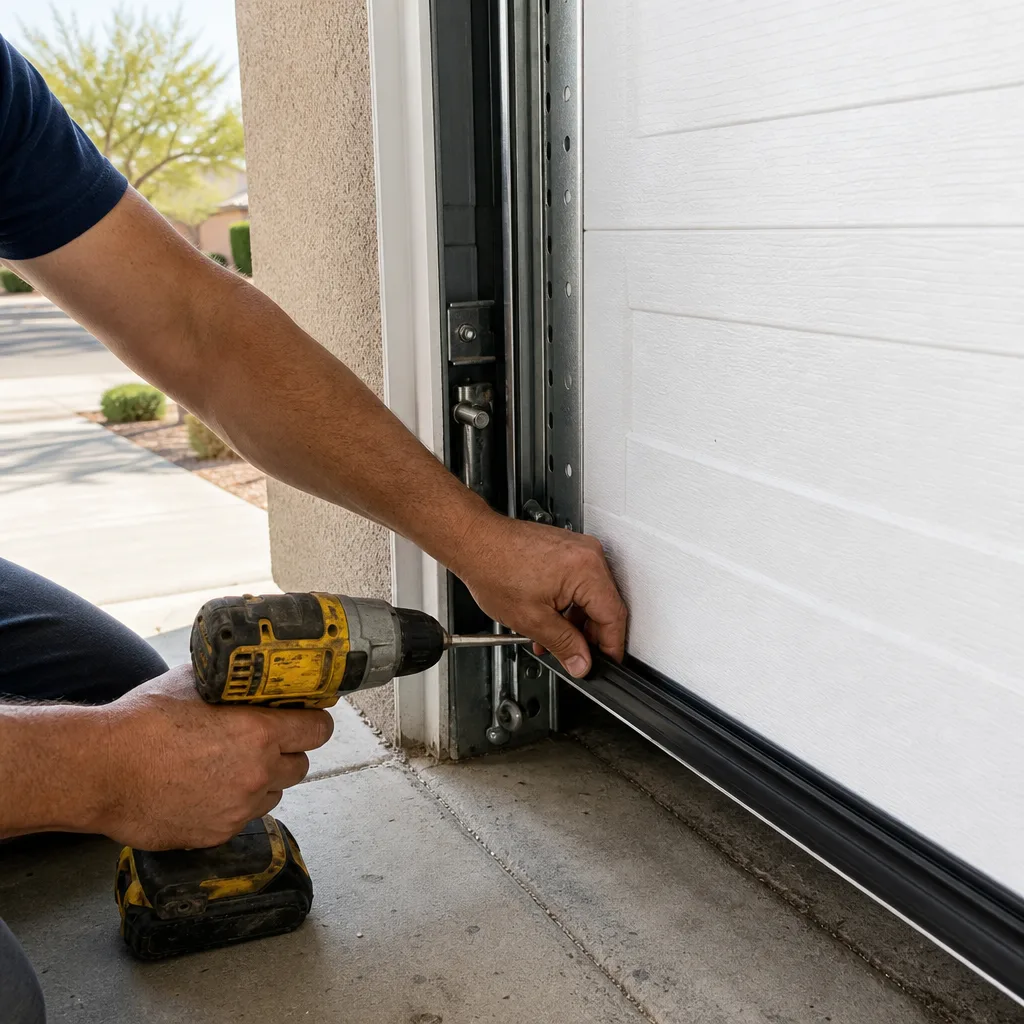
Hiring a garage door contractor in Mesa comes down to documentation. The license gets you in the door. The written price and written scope keep the invoice honest. The photo record proves what happened. Ask for all three, and walk away from any contractor who treats any of them as unusual. If you’d rather skip the vetting process and work with a company that operates this way as a matter of written standard, not a sales pitch, call Servo Garage Doors Mesa at (520) 391-9660. You’ll get a live person, a free estimate, and a written price before a single tool touches your door. No urgency. No theater. Just the paperwork that makes “trust us” unnecessary.
Written by Marcus Deller, Owner at Servo Garage Doors Mesa, serving Mesa since 2015.