
Full 25-point door and opener safety check with every visit - springs, cables, rollers, tracks, and your LiftMaster or Chamberlain opener included
You get a price before we start. It does not change when the truck arrives.
 Before
 After
After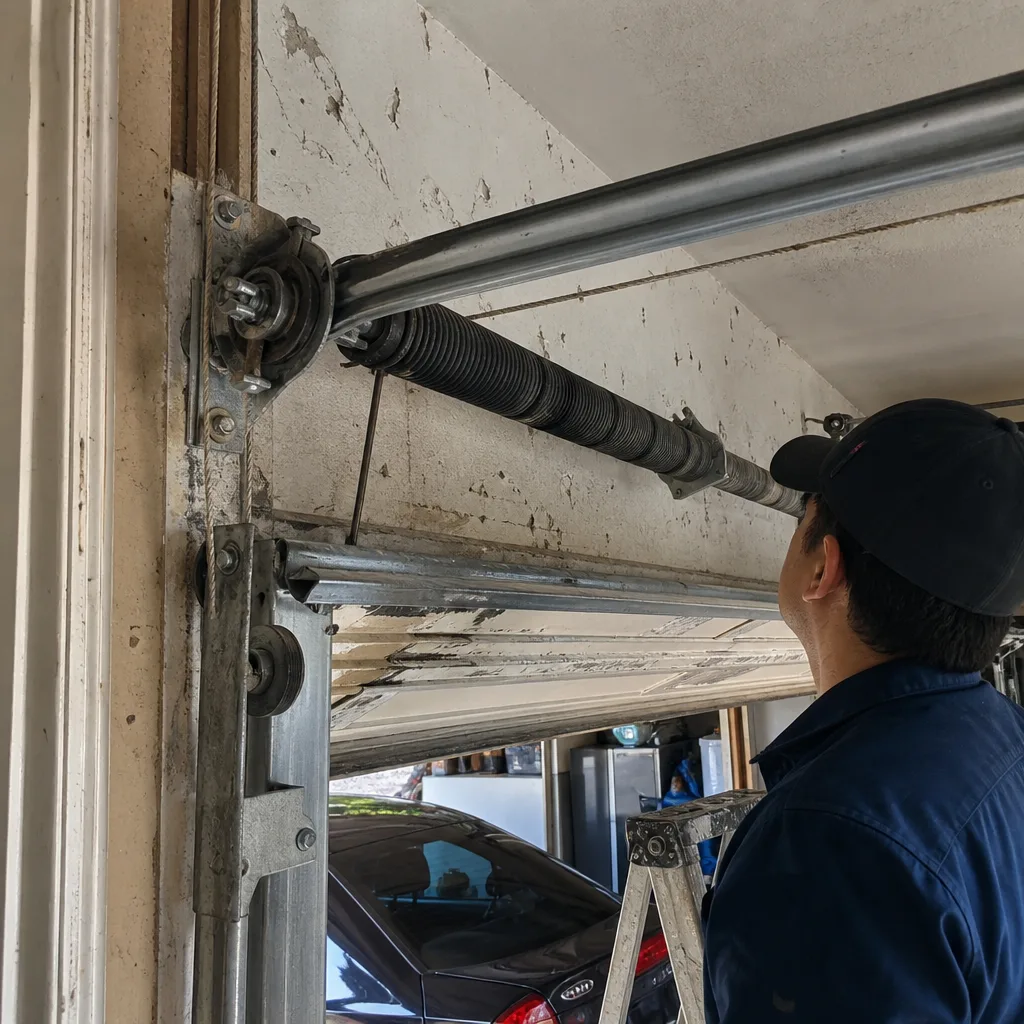 Before
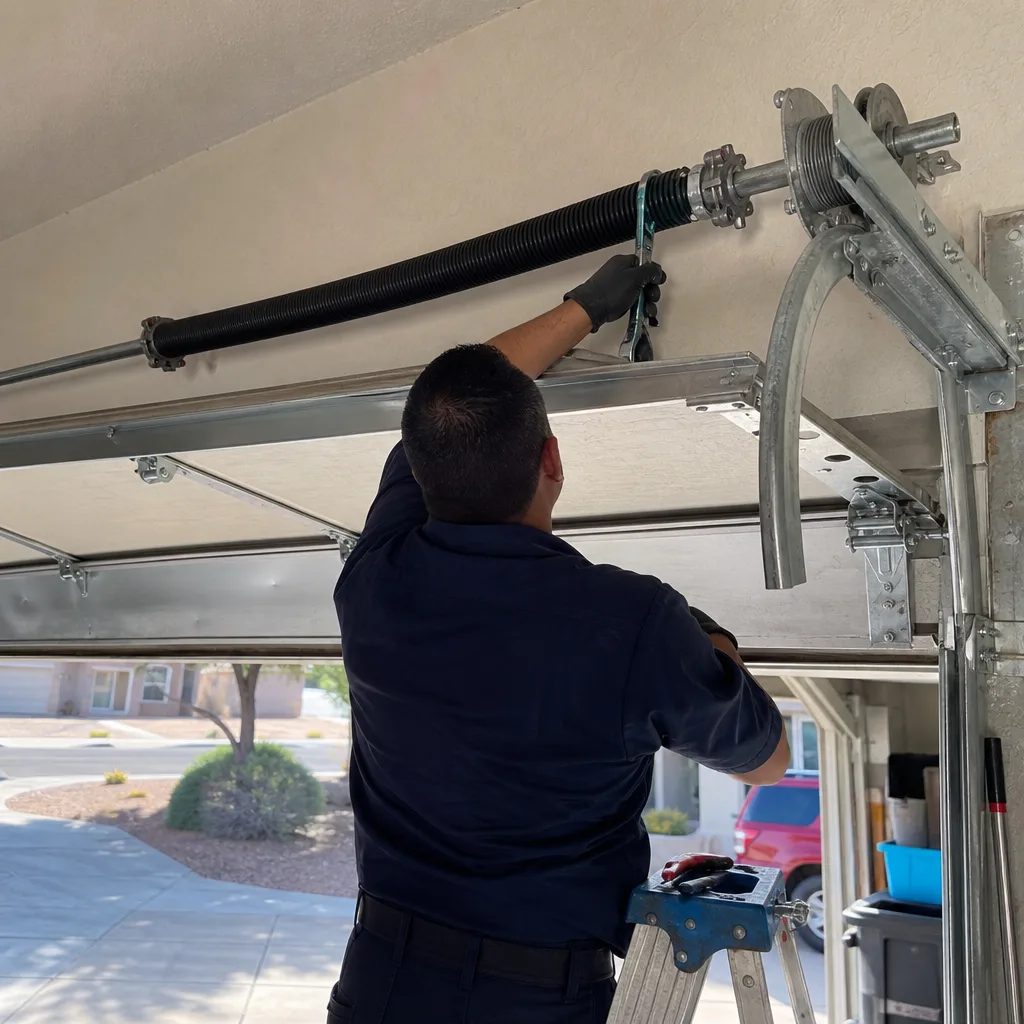 After
After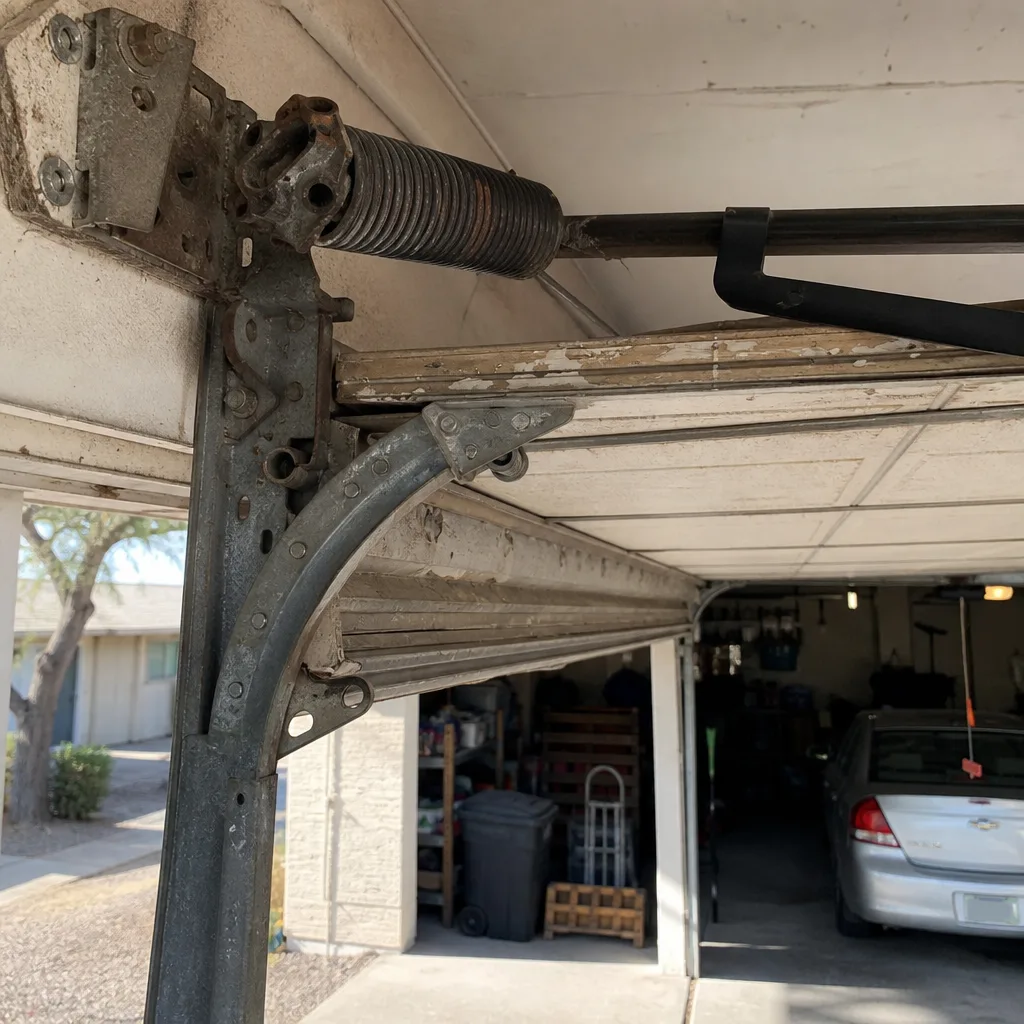 Before
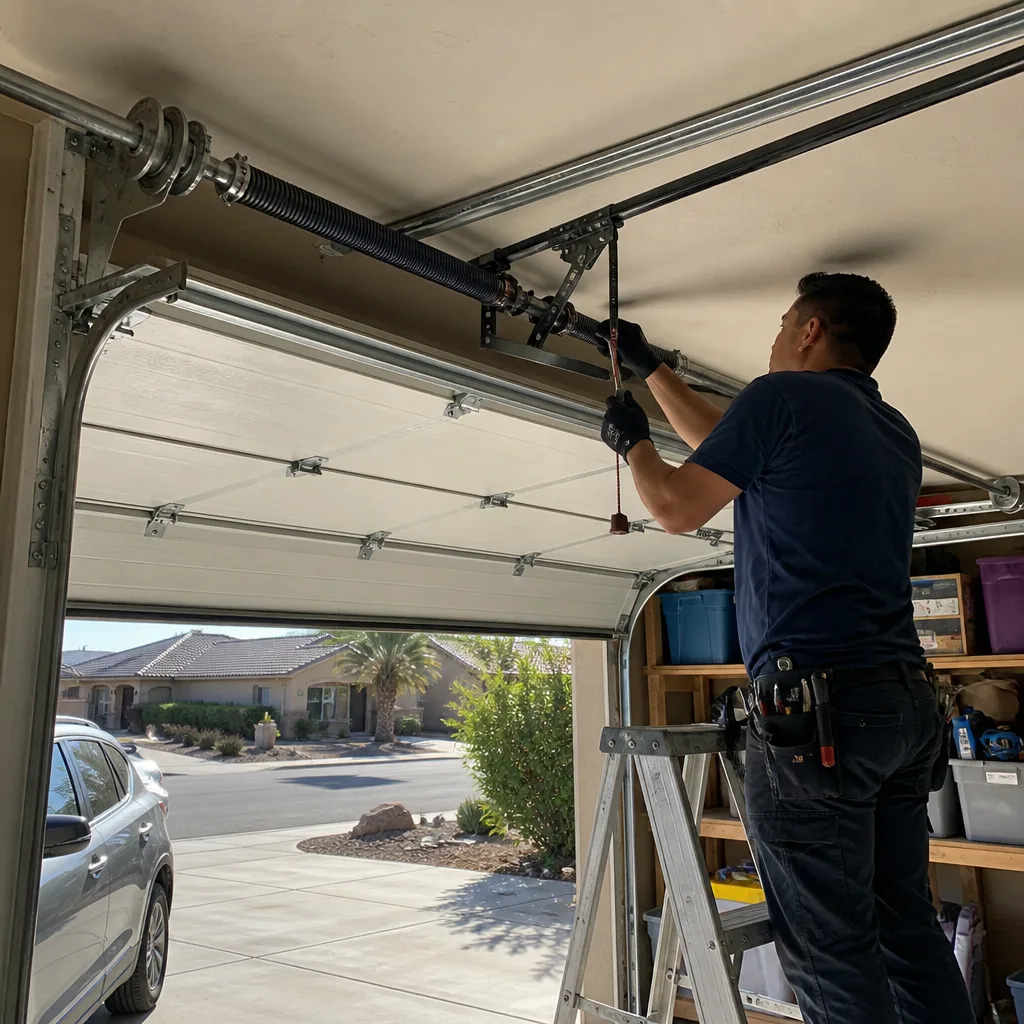 After
AfterRaynor Roller Replacement: The Mesa Owner’s Guide
Raynor roller replacement in Mesa typically runs $110-$220 installed, and we carry Raynor-compatible rollers on the truck for same-day swaps in most cases. Rollers are the wheels that carry your door along the vertical and horizontal tracks, and when one fails you’ll usually hear it before you see it: a grinding or squealing sound when the door moves, or a door that shudders and jerks partway up. The good news is this is one of the least expensive Raynor parts to replace, and the difference between a worn roller and a new one is immediate: the door runs quieter, smoother, and stops shaking the hardware loose.
Key Takeaways
- Installed Raynor roller replacement in Mesa: $110-$220, flat written price before work starts.
- Most Raynor doors use 2-inch or 3-inch nylon rollers; we stock both on the truck.
- Same-day replacement is available in most cases; call (520) 391-9660 and a live person answers.
- You get a photo record of the failed roller before we quote the swap. That’s Clause 4.
Which Raynor Models This Applies To
Raynor has used a few different roller specs across its residential lines, and matching the right one matters more than most people expect. The split is simple: most steel-panel Raynor doors from the last 15 years, including the Aspen, AP Series, and the commercial-ish CHI-built models, take a standard 2-inch nylon roller with a 7/16-inch stem. Older Raynor doors from the 1990s and early 2000s, especially wood-panel models, sometimes run a larger 3-inch roller on the bottom brackets to carry extra door weight. That 2-inch versus 3-inch difference is the single biggest compatibility gotcha, and it’s why we verify the roller size in person before we quote anything.
Raynor’s OEM rollers are solid parts. We will happily install OEM if that’s what you want. But we’ll also tell you something Raynor’s marketing won’t: several major aftermarket manufacturers produce rollers that match or beat OEM specs in one specific way that matters in Mesa, or more precisely, in the Valley’s dust and heat. The sealed-bearing nylon rollers, which use a steel ball bearing inside a nylon wheel, hold up meaningfully better here than the unsealed versions. Dust gets into an unsealed bearing, the grease breaks down, and the roller starts grinding. If your Raynor door is going to see a decade of Arizona summers, a sealed-bearing aftermarket roller for about $10 to $15 per roller more is usually the smarter spend. We’ll show you both options and the dollar difference before you choose.
Signs Your Raynor Roller Replacement Is Failing
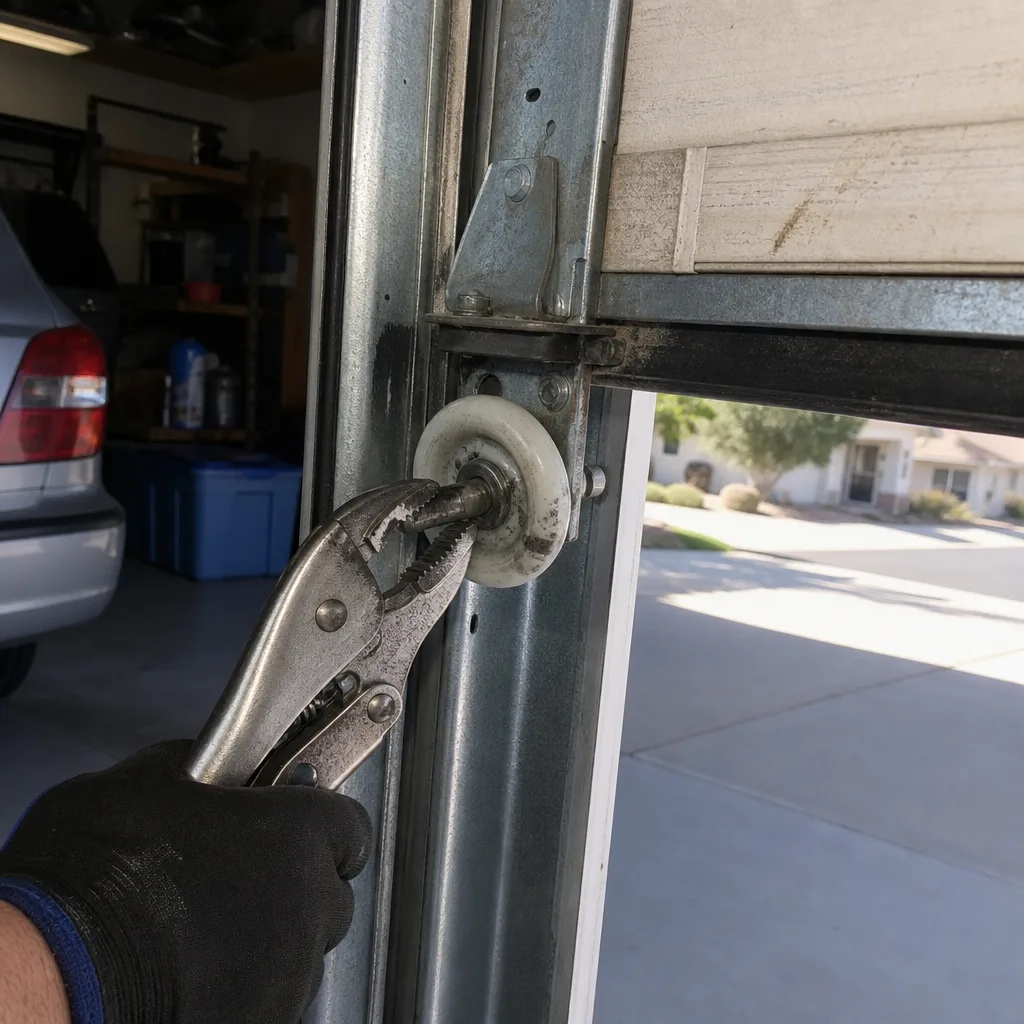
- Grinding or squealing when the door moves. This is the bearing drying out or filling with dust. A nylon wheel with a dead bearing will still roll, but it’s grinding metal-on-metal inside, and that sound travels straight up the track. Lubricant will quiet it for a week and then it’s back.
- The door shudders or jerks at the same point every cycle. A flat-spotted or seized roller doesn’t roll, it drags. The door hesitates, catches, then jumps forward. You can usually feel it in the opener motor as a rough start or mid-travel stumble.
- The door hangs slightly crooked in the opening. When a bottom roller wears down or the stem ovalizes, that corner of the door drops. It may only be a quarter inch, but it shows up as uneven gaps under the door or a visible tilt.
- You can see the roller wobble while the door moves. If the nylon wheel is cracked, chipped, or has separated from the bearing, it will visibly shimmy in the track. This is worth fixing before the roller shatters completely and leaves the panel riding on bare metal.
- The door is louder than it was a year ago. Rollers fade gradually, so you may not notice until the noise has become normal. If your Raynor door sounds like an old shopping cart, the rollers are usually the first thing we check, and the most common thing we replace on a ten-year-old Mesa install.
BeforeAfterReplacement Cost & What’s Included
In Mesa, we price roller replacement at $110-$220 installed. That is the full job, not the per-roller teaser price some companies advertise. The range exists because of two variables: how many rollers you’re replacing and which roller quality you select. A standard 10-roller setup with 2-inch nylon rollers at the base spec lands at the bottom of that range. A full 12-roller swap or a set that includes the heavier 3-inch bottom rollers and sealed-bearing upgrades lands at the top. The price you get is a flat, written figure with a written scope, delivered before any work starts. That’s Clause 1 of The Haven Standard, and it means the quote you approve is the invoice you pay. Labor, parts, and the photo record are all included. We don’t add a trip charge, a disposal fee, or a surprise “shop supply” line at the end.
Every roller replacement we do carries the 365-Day Done Right Promise. If a roller fails or the install wasn’t right within a year, we make it right. No fine print, no pro-rated formula.
DIY or Call Us?
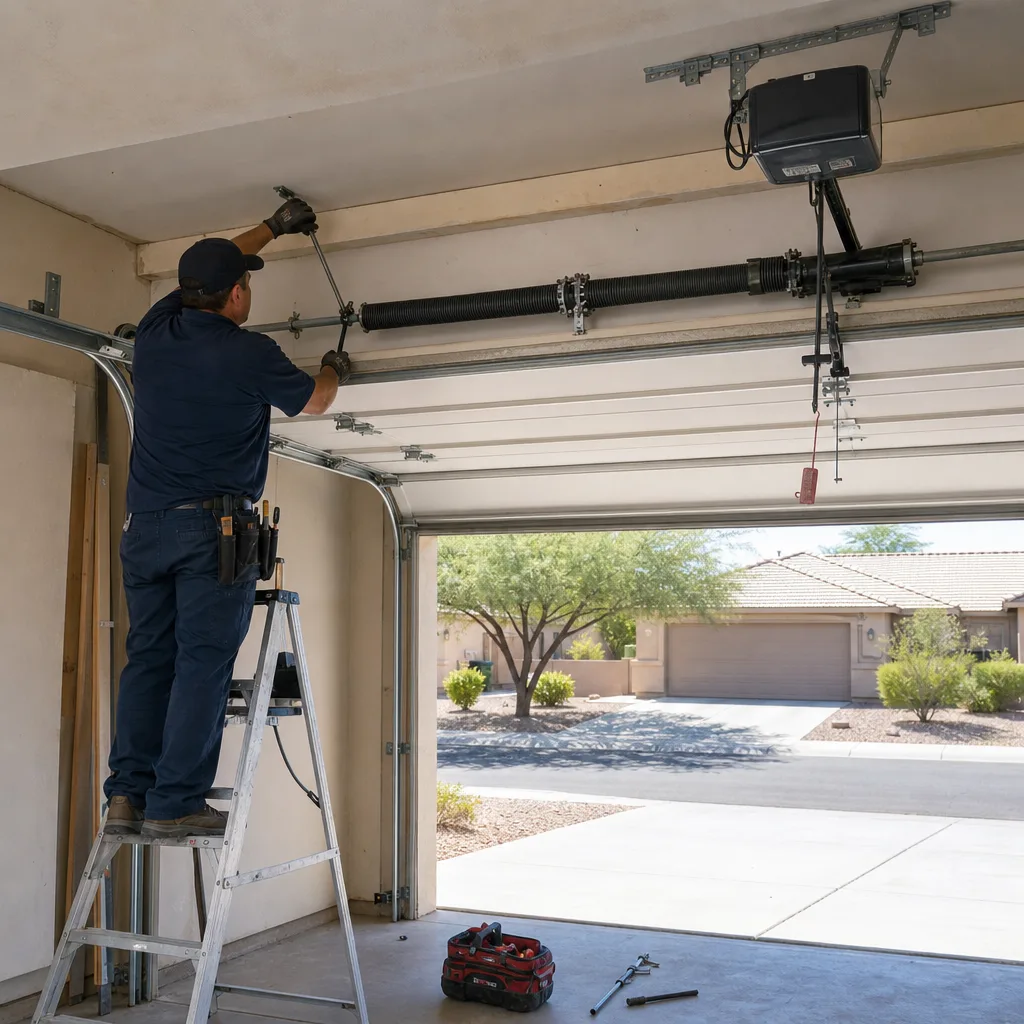
Rollers are one of the safer garage door parts to inspect yourself, and we’ll tell you exactly what to look for. With the door closed, run a hand along the track and feel the rollers through the track opening. If a wheel is cracked, missing chunks of nylon, or the stem is leaning, you have a part to replace. You can safely identify a bad roller without touching any of the high-tension hardware. What you shouldn’t do is attempt to remove a bottom roller yourself. The bottom bracket is connected to the lift cable, which is under constant tension from the torsion spring. If that cable comes off the roller stem while the door is up, the spring releases its energy through the cable, and that’s how people lose fingers or worse. On a top or side roller, a confident DIYer with the right tools can often manage a swap. On bottom rollers, we tell Mesa homeowners the same thing we’d tell our own families: call someone who does this every day. One bottom roller takes us about 20 minutes, and the full job is usually under an hour. Call (520) 391-9660 and we’ll give you a straight answer about whether it’s a job you can safely do or one we should handle.
FAQs
In Mesa’s heat and dust, expect 7 to 10 years from standard nylon rollers and 10 to 15 from sealed-bearing rollers. The Phoenix-area climate shortens roller life compared to milder regions because dust works into the bearings and the summer heat accelerates grease breakdown. If your Raynor door is older than about eight years and getting louder, a roller inspection is the cheapest diagnostic you can do. Call (520) 391-9660 and we’ll tell you what the rollers look like and what a swap would cost.
No, a worn or seized roller is a replace-only part. The nylon wheel and the bearing are a sealed unit, and by the time you can hear or see the wear, the damage is mechanical. Lubricating a dying roller is a temporary noise fix, not a repair. The good economics here: a replacement roller costs far less than the track damage and panel wear you’ll pay for if you let a seized roller grind for another year.
A full roller replacement on a standard two-car Raynor door takes 45 to 60 minutes from start to finish. We work with the door in the closed position, release tension the correct way, and have the door running again before the hour is up. Most Mesa customers schedule it around a single call and go about their day. Call (520) 391-9660 and we’ll give you a real arrival window, not a four-hour block.
Yes, we stock 2-inch and 3-inch nylon rollers, both standard and sealed-bearing, on every truck that leaves for a Mesa job. That covers the majority of Raynor residential doors, plus LiftMaster, Chamberlain, and Genie openers we work around daily. If you have an unusual spec, we’ll know after a two-minute look and can usually have the right part the same day.
Why Servo Handles Raynor Replacement Differently
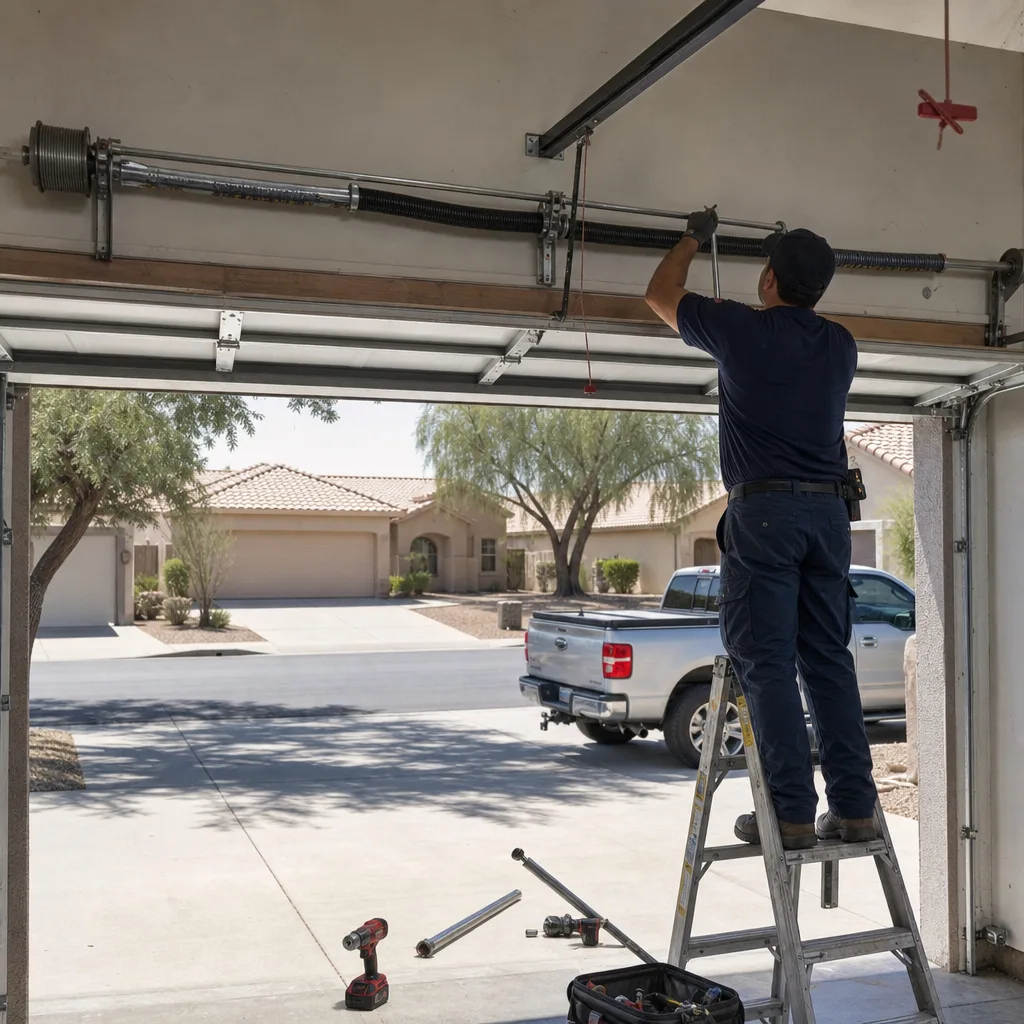
Servo Garage Doors is independently owned and operated under The Haven Standard, not a franchise and not a Raynor dealer pushing one brand’s parts. That independence matters because our only obligation is to your door. Marcus Deller and our techs grew up on mechanical systems, and the rule Marcus brought to this company from the start is simple: photograph the failed part before quoting a replacement. That rule is now Clause 4 of our written standard, and it is the reason you’ll never get a phone quote for a roller you haven’t seen with your own eyes. We send you the photo of the cracked wheel, the siezed bearing, the ovalized stem, and then we quote the swap. Name the part. Quote the price. Then we start.
Every Servo visit also ends with a documented photo record of what was replaced and how the door runs after. That record is yours, not ours. We’ve installed parts on more than 18,000 garage doors since 2015, and every one of them left with a written price before work started and a photo file when the tech pulled out of the driveway.
Get a Flat Price on Raynor Roller Replacement in Mesa
If your Raynor door is grinding, shaking, or just louder than it used to be, call us at (520) 391-9660. A live person answers, 24/7, and we’ll schedule a time that works for you. You’ll get a flat written price before any work starts, a technician in a uniform who can show you exactly what failed, and a door that runs the way Raynor built it to run. If you have a competing written estimate, bring it. We’ll give a free second opinion, and we’ll show you the difference on paper, not in a sales pitch.
Written by Marcus Deller, Owner, Servo Garage Doors Mesa at Servo Garage Doors Mesa, serving Mesa and nearby areas.